Polymodality: Definition and Principle
Definition: The simultaneous superposition of two or more different modes of limited transpositions (potentially at different transposition levels), with each textural layer or staff operating within its assigned mode for both melodic and harmonic purposes. This creates stratified harmonic textures where each layer maintains modal consistency while combining to produce complex vertical sonorities.
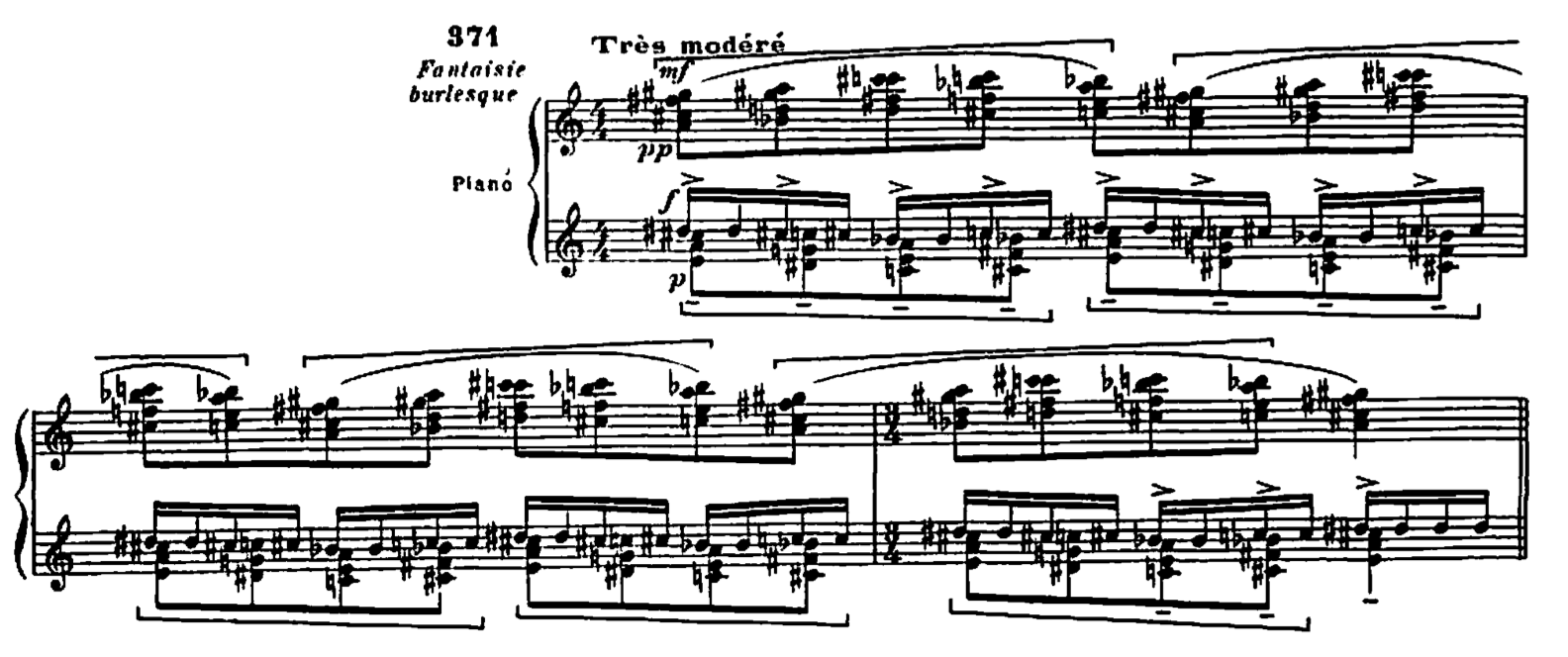
Messiaen's Treatment: Messiaen establishes the chapter's scope immediately: all examples will concern only modes of limited transpositions, demonstrating either the superposition of these modes (polymodality) or the connection of one polymodality to another (polymodal modulation). The fundamental principle: in each example, the modes are used melodically and harmonically, meaning that when Messiaen designates "upper staff, such and such a mode," all notes of the upper staff belong to that mode, and similarly for "lower staff, such and such a mode," all notes of the lower staff belong to that mode. This strict modal consistency within each layer distinguishes polymodality from freer approaches where modes might function only melodically or where pitch materials mix less systematically.
Modern Context: Polymodality represents a systematic approach to textural stratification based on pitch-class organization. Contemporary theory might describe this technique using concepts from transformational theory or voice-leading spaces—each layer occupies its own modal "space" while the combined texture creates a resultant harmonic field. The technique anticipates later developments in textural composition, particularly in the music of composers like Ligeti (whose micropolyphony involves similar superposition of distinct pitch collections), Carter (whose simultaneous streams employ different harmonic materials), and Lutosławski (whose aleatory counterpoint superimposes independent harmonic layers). What distinguishes Messiaen's approach is the systematic basis in symmetrical pitch collections—each mode possesses distinctive intervallic properties and limited transposability, ensuring that polymodal combinations maintain coherence rather than devolving into undifferentiated chromaticism. The restriction that all notes within each layer belong to the assigned mode creates compositional discipline while allowing substantial harmonic complexity through the vertical combination of modal layers. This differs from freely chromatic stratification where layers might employ any pitch materials without systematic constraints.
Examples: Principle demonstrated throughout Examples 371–382