Variations of the First Theme, Separated by Developments of the Second
Definition: A formal procedure alternating variations of a primary theme with developmental episodes of a secondary theme, creating rondo-like structure where theme variations function as ritornellos and second-theme developments function as episodes.
Messiaen's Treatment: Form used in the seventh part of Quatuor pour la fin du Temps: "Fouillis d'arcs-en-ciel, pour l'Ange qui annonce la fin du Temps."
Analysis (Examples 161–169):

-
(a) Exposition of first theme (melodic): Example 161—a complete sentence in Mode 2, drifting between tonalities of A major, F-sharp major, E-flat major (see Chapter XVII's Example 339 where it is quoted completely with its harmonics)
-
(b) Exposition of second theme (rhythmic) by four instruments (violin, clarinet in B-flat, violoncello, piano): Example 162—drawn from second movement of the Quatuor
-
(c) First variation of the first theme, accompanied by clarinet's counterpoint, still in Mode 2, drifting between F-sharp, E-flat, and E major tonalities (Chapter XVI's Example 326 quotes first measures)
-
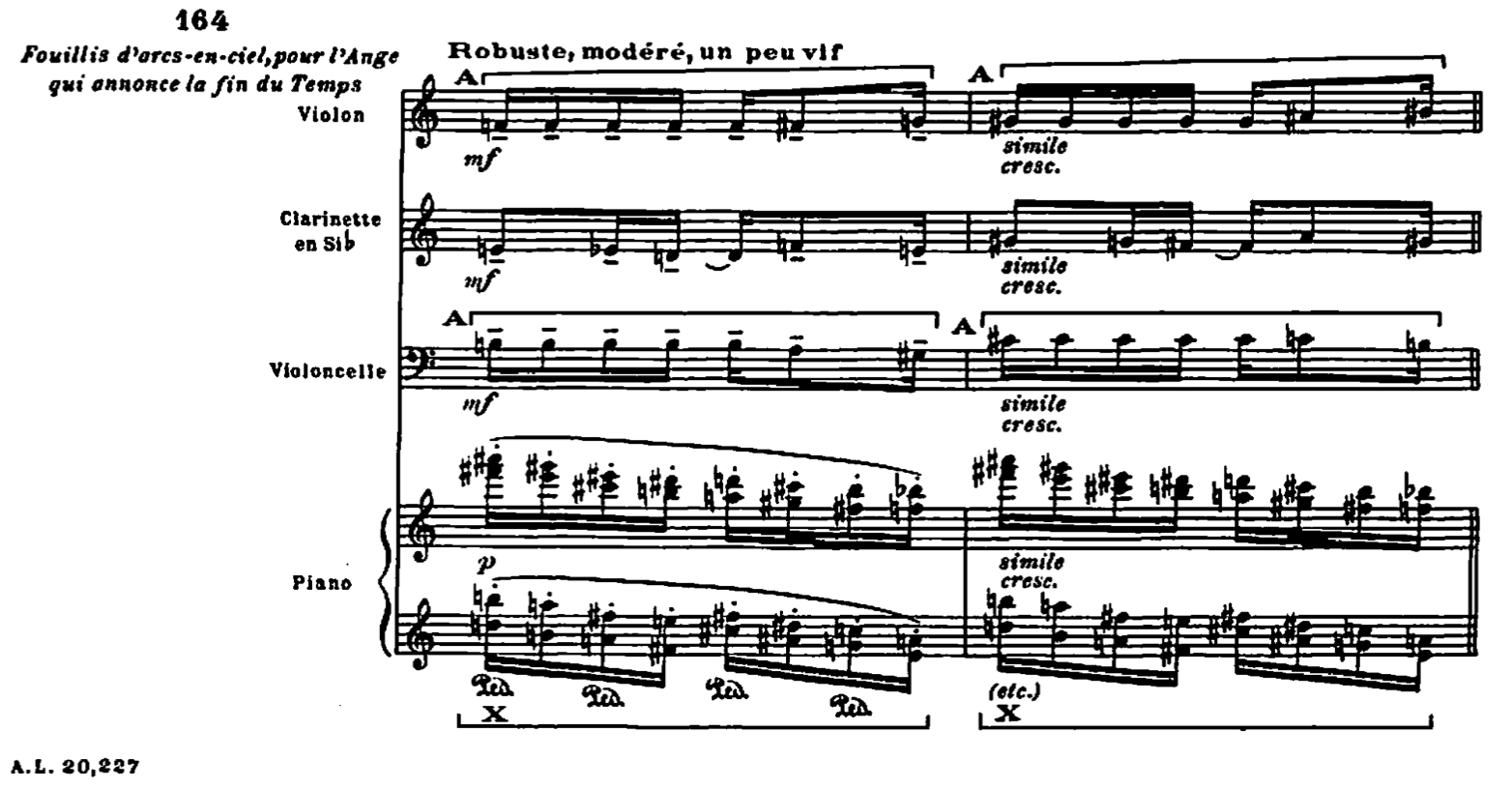
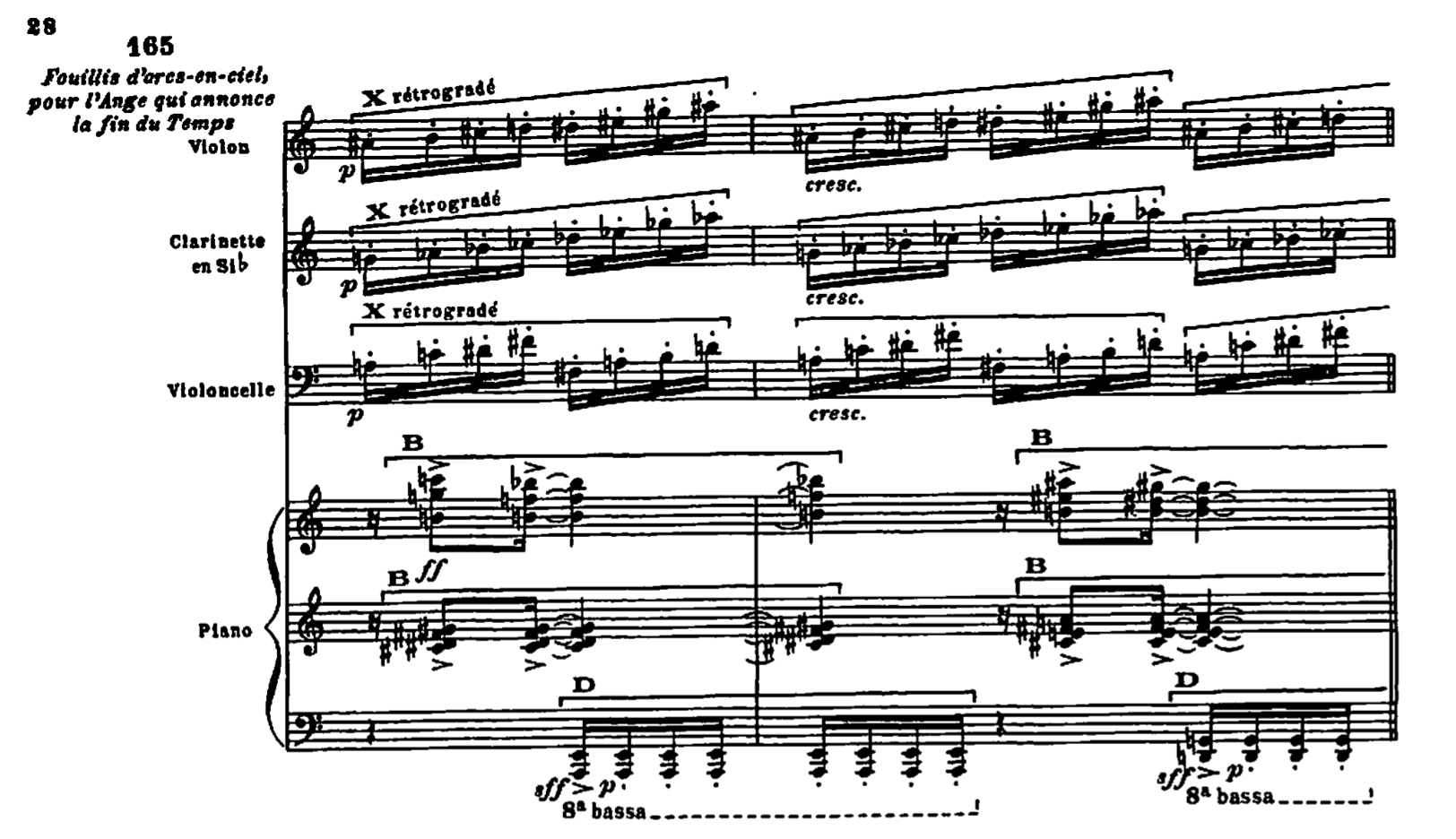
(d) Development of rhythmic elements A, B, C, D, all drawn from second theme (Example 163): First measures of second theme, development of A in strings over cluster of chords X in piano drawn from second movement of Quatuor (Example 164); next measures of second theme, development of B and D in piano under cluster X retrograded in violin and clarinet for the two top voices of the chords (violoncello partially retrogrades the two low voices), with use of dominant chord with appoggiaturas in B and effects of inferior resonance in D (Chapter XIV, articles 1 and 4) (Example 165); then development of C by elimination (Example 164 and 165, clarinet sounds a tone lower than notation)
-
(e) Second variation of first theme—arabesques in violin and piano opposed to clarinet in low register and col legno of violoncello
-
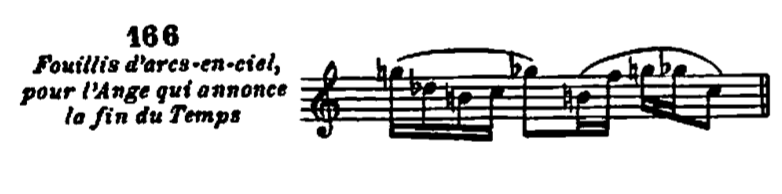
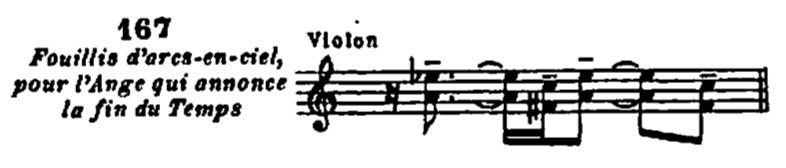
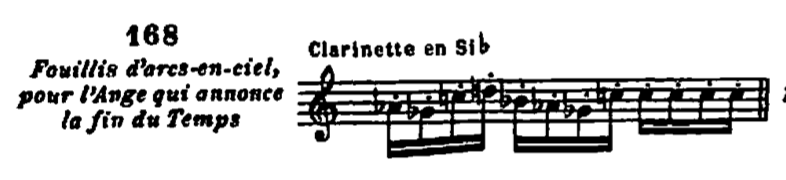
(f) Combination of commentary of second theme (Example 166) with rhythm of the first (Example 167), and clarinet recall in equal values of sixth movement of Quatuor (Example 168)
-
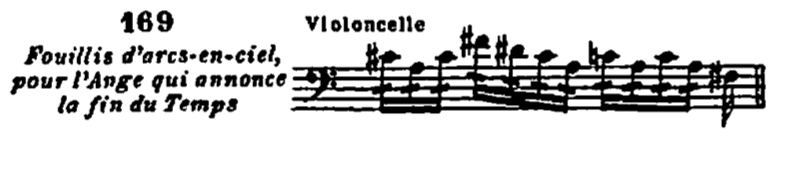
Development of trilled chords ending second theme's commentary. Cluster X in normal and retrograde movement simultaneously. Then new succession of chords drawn from second theme and from second movement of Quatuor. Finally, "jumble"—clusters, cascades of chords. Clarinet repeats arpeggio formula of dominant chord already heard in second and third movements of Quatuor. Violin and violoncello, borrowing diminution from first theme (Example 169), make of it an ascent in development by elimination (Chapter X), leading naturally to the final variation.
-
(g) Last variation of first theme, same mode and same tonal drifting. Sentence trilled throughout. Short recall of second theme to conclude.


Modern Context: This form creates sophisticated interaction between variation and development principles:
Structural elements:
- Theme variations: Progressive transformations of primary melodic material
- Developmental episodes: Working-out of secondary rhythmic material
- Alternation principle: AVAAVA... structure (where A = first theme, V = second theme development)
Historical precedents:
- Rondo form: Theme returns alternating with episodes (ABACA)
- Variation form: Progressive transformation of single theme (Baroque chaconne/passacaglia, Classical variations)
- Development variation: Brahmsian synthesis of variation and development
Messiaen's innovation lies in treating themes parametrically:
- First theme: Melodic, varied primarily through textural/registral changes while maintaining contour
- Second theme: Rhythmic, developed through elimination, combination, retrograde
This creates formal richness through parametric independence—melodic theme varies while rhythmic theme develops, two processes operating simultaneously but independently.
The self-quotation from second and sixth movements of the Quatuor demonstrates cyclic formal thinking—materials recurring across movements, creating large-scale unity. This reflects Franck/d'Indy influence on French formal thinking (cyclical forms with thematic transformation across movements).
The final "jumble" (fouillis)—clusters, cascades of chords—before final variation represents climactic accumulation, analogous to development retransition in sonata form. The apocalyptic program (angel announcing the end of time) finds musical realization in this textural climax before serene final variation.
Examples: Examples 161–169 comprehensively trace the alternation of theme variations and developmental episodes.