Commentary (Commentaire)
Definition: A melodic development of the theme in which theme fragments are repeated in the initial key upon different degrees, or in other keys, and are varied rhythmically, melodically, and harmonically—the commentary can also develop elements foreign to the theme while presenting them with certain agreement of accent.
Messiaen's Treatment: The commentary is a melodic development where theme fragments repeat in the initial key upon different degrees or in other keys, varied rhythmically, melodically, and harmonically. The commentary can also develop elements foreign to the theme but presenting them with certain agreement of accent.
The middle period of Example 132 (Thème et variations) is a commentary. Binary and ternary sentences alternate theme and commentaries.
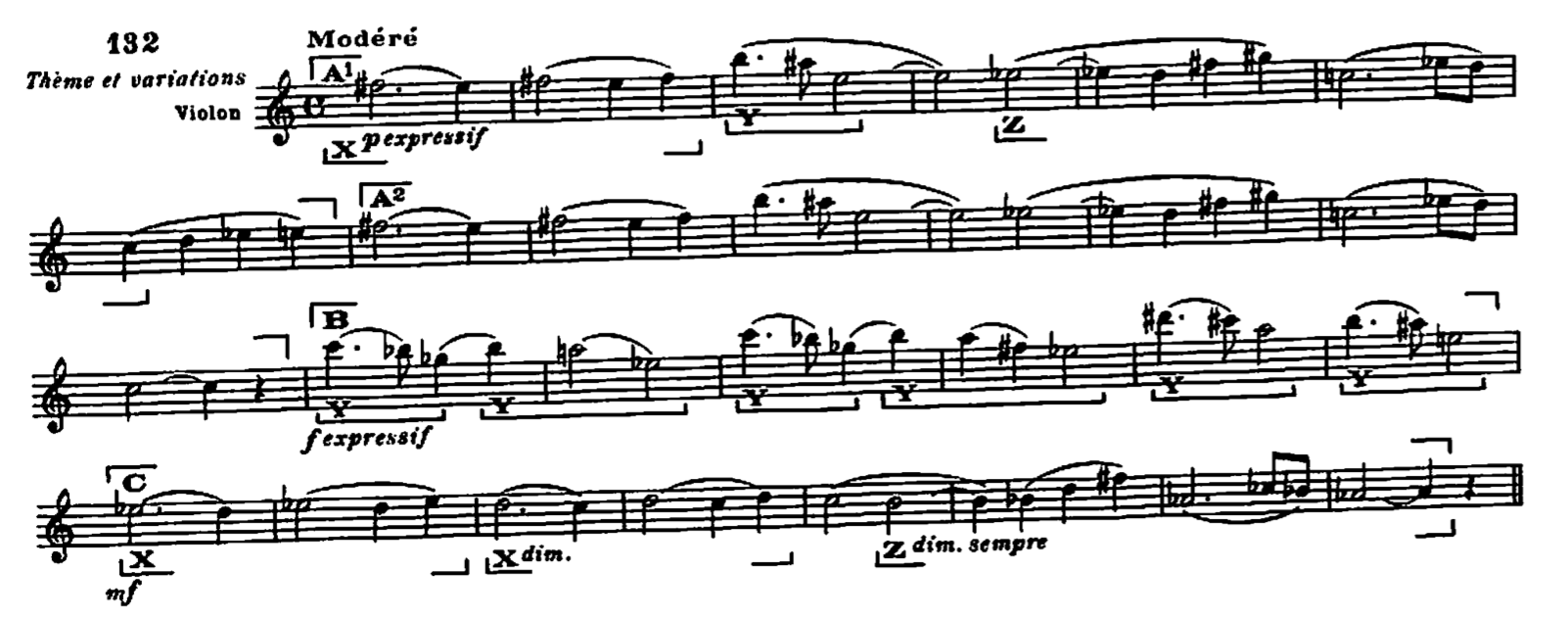
Modern Context: Commentary represents Messiaen's term for what traditional theory calls:
- Development: Working out of thematic material (sonata form)
- Episode: Contrasting material (rondo, fugue)
- Variation: Transformation of theme preserving essential features
Distinctive features of Messiaen's commentary:
- Transpositional treatment: Fragments repeated "upon different degrees"—systematic transposition within modal context
- Multi-parametric variation: Rhythmic, melodic, AND harmonic transformation simultaneously
- Foreign elements permitted: Commentary need not derive exclusively from theme, but foreign elements must show "certain agreement of accent"—rhythmic profile or character must cohere
The phrase "agreement of accent" suggests that even when melodic/harmonic material is new, rhythmic character must relate to the theme. This reflects Messiaen's emphasis on rhythm as unifying parameter—new melodies can appear if rhythmically consistent with thematic character.
The reference to Example 132's middle period as commentary demonstrates that commentary functions as middle or developmental section within larger sentence structures.
Examples: Example 132's middle period exemplifies commentary; other examples appear in binary and ternary sentences.