Song-Sentence (Phrase Musicale)
Definition: A three-period structure comprising (a) theme functioning as antecedent and consequent, (b) middle period inflected toward the dominant, and (c) final period as an issue of the theme—analogous to the classical period with antecedent-consequent structure but extended through a middle developmental section.
Messiaen's Treatment: The song-sentence divides into:
- Theme (antecedent and consequent)
- Middle period, inflected toward the dominant
- Final period, an issue of the theme
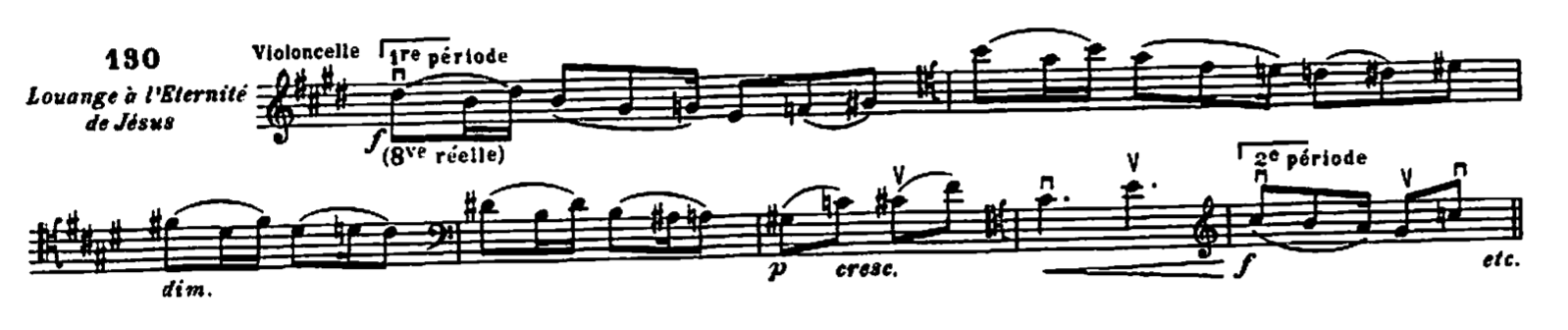
Example 129 presents the theme (antecedent). Example 130 shows the theme repeated with different melodic descent (consequent), followed by the middle part, exceptionally long and divisible into three periods. Example 131 demonstrates that after a cadence in B major (key of the dominant), an ascent with crescendo leads to the final period over the six-four chord in E major, the initial key, ending in absolute pianissimo.


Example 132 provides another instance. In detail:
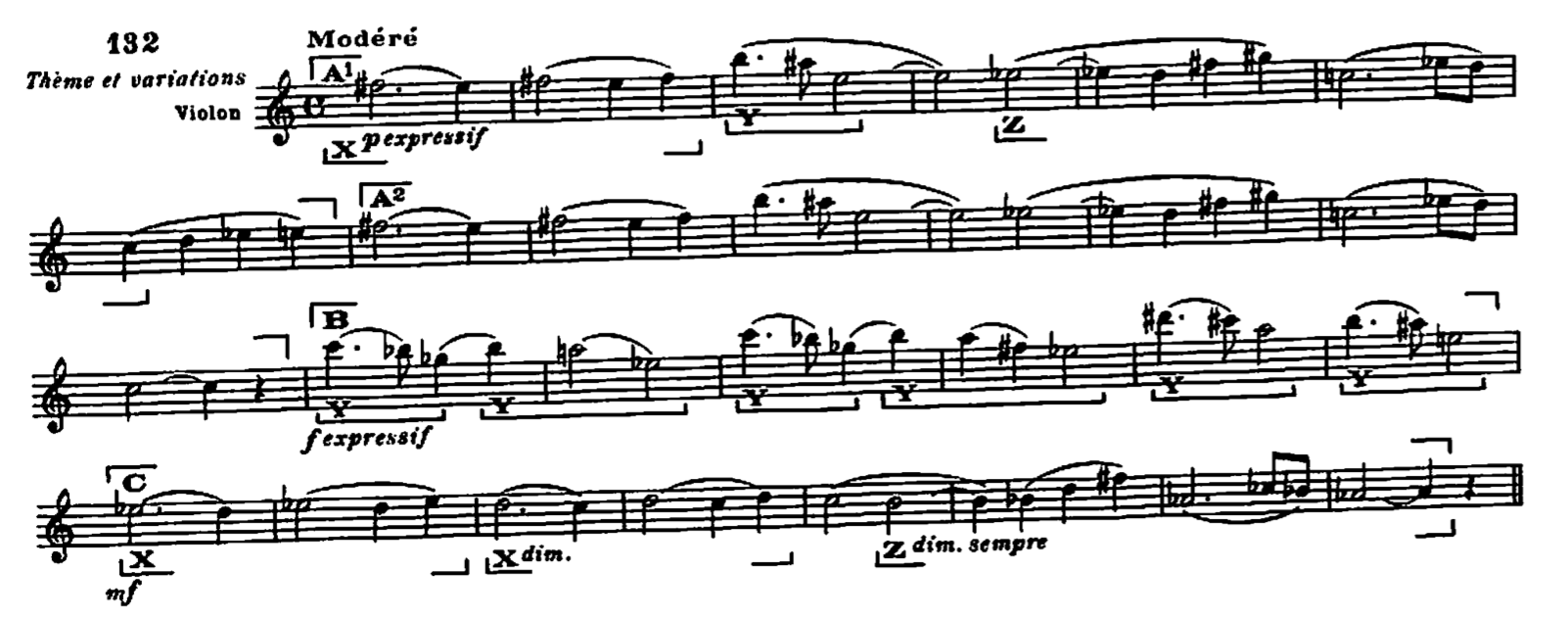
- A¹: Antecedent of the theme
- A²: Consequent of the theme
- B: Middle period, developing fragment Y (bracketed in the theme); Y is repeated six times upon different degrees—first time melodic variant, second time rhythmic variant
- C: Final period, an issue of the theme; repeats X twice and Z once upon other degrees; Y, developed in the middle period, is absent here
Modern Context: The song-sentence represents Messiaen's adaptation of the classical period structure:
Classical analogy:
- Antecedent phrase: Establishes material, often ending with half cadence
- Consequent phrase: Answers antecedent, typically ending with authentic cadence
- Song-sentence: Expands this through middle period (like development in sonata form) before final period (recapitulation-like return)
This creates a miniature ABA' structure:
- A (theme: antecedent + consequent)
- B (middle period: developmental)
- A' (final period: return/resolution)
The "inflection toward the dominant" in the middle period reflects traditional tonal practice, though Messiaen's modal context transforms this—the dominant functions more as contrast or tension point than as true dominant in functional harmonic sense.
The developmental middle period employs techniques from Chapter X (elimination, interversion, registral change) to vary and extend thematic material. The repetition of fragment Y "six times upon different degrees" demonstrates systematic variation—same material at different pitch levels (transposition), with alternating melodic and rhythmic variants.
The final period's omission of Y (material developed in the middle) creates formal closure through return to original material (X and Z) without middle-period material, analogous to recapitulation omitting development-section themes.
The dynamic shaping—crescendo leading to final period, then ending "in absolute pianissimo"—demonstrates expressive use of dynamics for formal articulation, with the soft ending creating contemplative closure rather than triumphant conclusion.
Examples: Examples 129–132 systematically demonstrate song-sentence structure and its components.