Melodic Cadence Formulas
Definition: Characteristic melodic patterns functioning as closural gestures, derived from historical models and adapted to Messiaen's harmonic language—recurring contours that signal phrase endings or structural articulations.
Messiaen's Treatment: Messiaen identifies several cadential formulas:
-
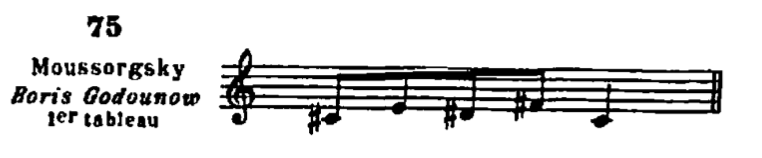
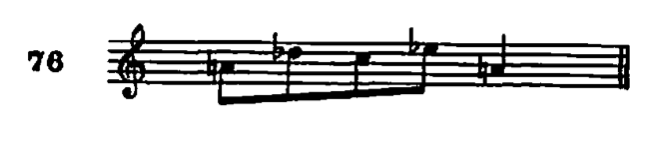
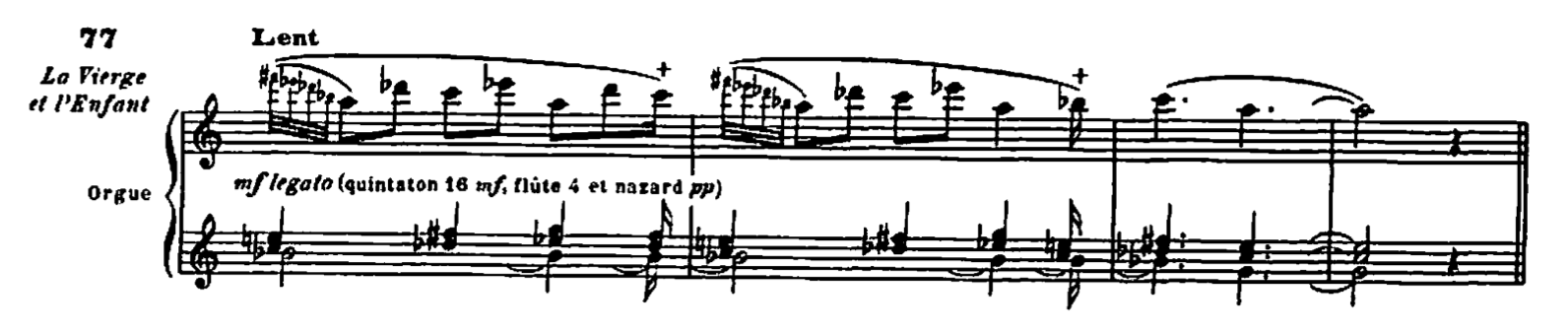
Five-note opening from Moussorgsky's Boris Godounov (Example 75): Used as basis for first melodic cadence formula (Example 76), applied with added values (Chapter III) and harmonies from Mode 2 (Chapter XVI), shown in Example 77. Further uses appear in Examples 78–79.
-
Grieg's Chanson de Solveig (Example 80): Serves as point of departure for a theme (Example 81), with other uses in Examples 82–84.
-
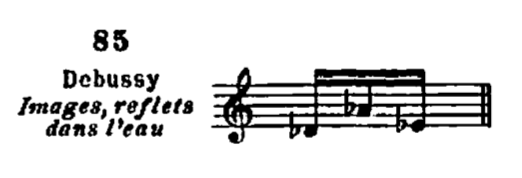
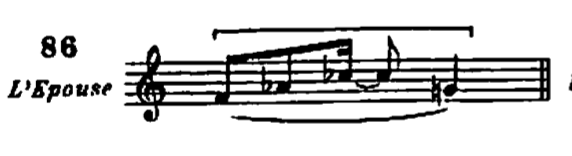
Debussy's three-note opening from Reflets dans l'eau (Example 85): Engenders numerous melodic contours (Examples 86–89).
-
Descending augmented fourths (Example 90) and descending major sixths (Example 91).
-
Returning chromatic formulas (Example 92), bracketed to show the returning chromaticisms, incorporating added values and rāgavardhana interpretation (Chapter II), shown in Example 93.
-
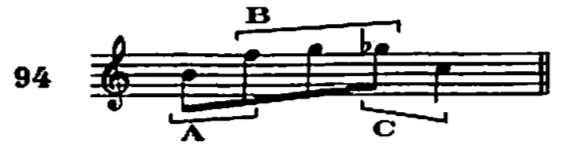
Formula containing returning chromaticism in B with two intervals of diminished fifth in A and C (Example 94)—the diminished fifth, harmonically equivalent to augmented fourth. Uses appear in Examples 95–99.









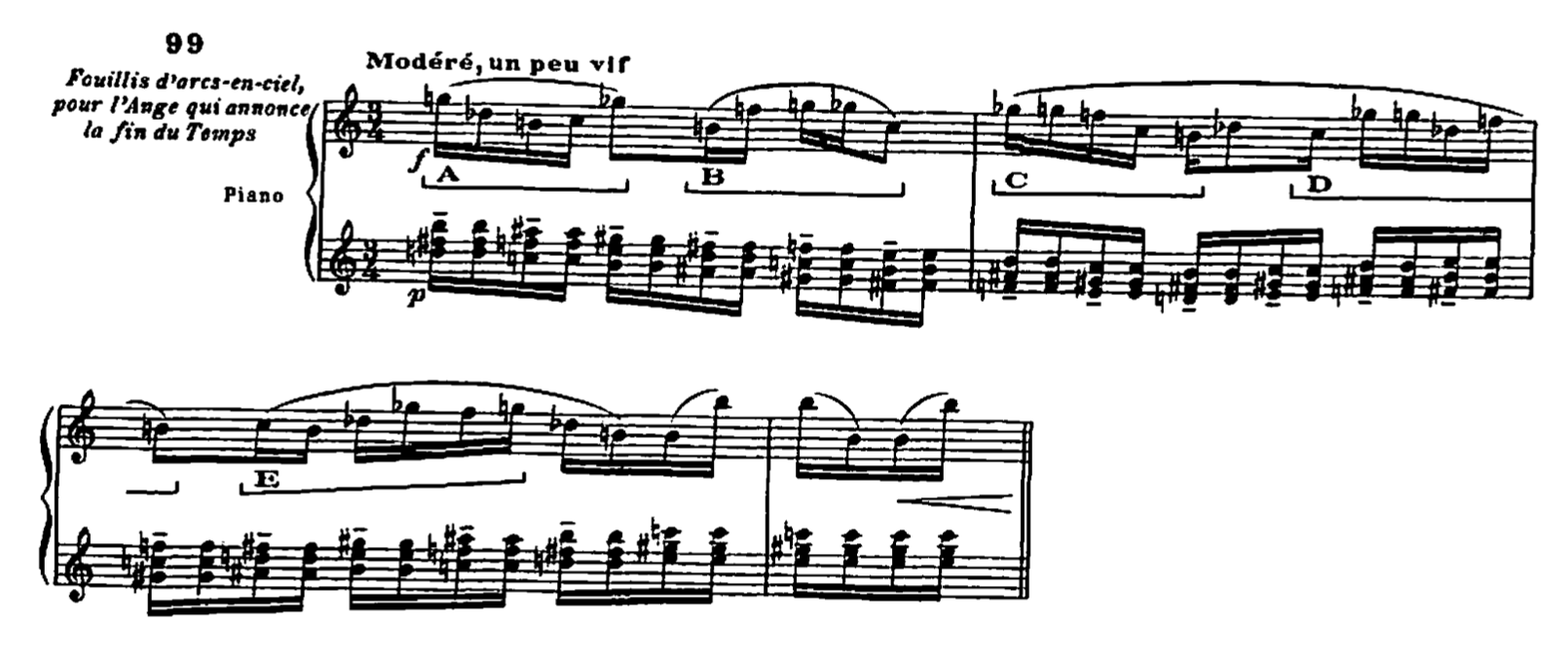
Example 99 develops the formula through contrary motion (A), normal motion (B), retrograde motion (D), and interversion of notes in C and E. This references Chapter X's discussion of melodic development and superposes Modes 5 and 6 (Chapter XVI).
Modern Context: Melodic cadence formulas represent identifiable contour patterns functioning similarly to harmonic cadences—gestures signaling closure or articulation. This relates to:
- Clausulae: Medieval cadential formulas with characteristic melodic patterns
- Galant schemata: Eighteenth-century stock melodic-harmonic patterns (Gjerdingen)
- Melodic archetypes: Recurring contour patterns appearing across repertoires (Narmour's implication-realization theory)
Messiaen's practice of deriving formulas from specific historical works (Moussorgsky, Grieg, Debussy) demonstrates compositional intertextuality—conscious reference to and transformation of existing materials. This differs from unconscious stylistic absorption; Messiaen explicitly acknowledges sources and shows their transformation through his techniques (added values, modal harmonization, rhythmic treatment).
Contemporary music theory recognizes melodic contour as a significant structural feature independent of specific pitch content. Contour analysis (Friedmann, Morris) shows that intervallic direction patterns (up-down-up, descending stepwise, etc.) function as recognizable shapes even when exact intervals change. Messiaen's formulas operate primarily through contour—the specific pitches matter less than the directional pattern and characteristic intervals.
The transformation techniques applied to these formulas (contrary motion, retrograde, interversion) demonstrate that melodic material can undergo operations similar to rhythmic transformations (Chapter IV–V), extending parametric thinking to the melodic domain.
Examples: Examples 75–99 systematically present source materials and their transformations into Messiaen's melodic cadences.