Bird Style (Genre d'oiseau)
Definition: A compositional genre or stylistic category characterized by melodies inspired by and modeled on bird vocalizations, incorporating their rhythmic freedom, melodic unpredictability, ornamental complexity, and characteristic contours while adapting them to Messiaen's compositional system.
Messiaen's Treatment: Messiaen provides several examples of the "bird" genre:
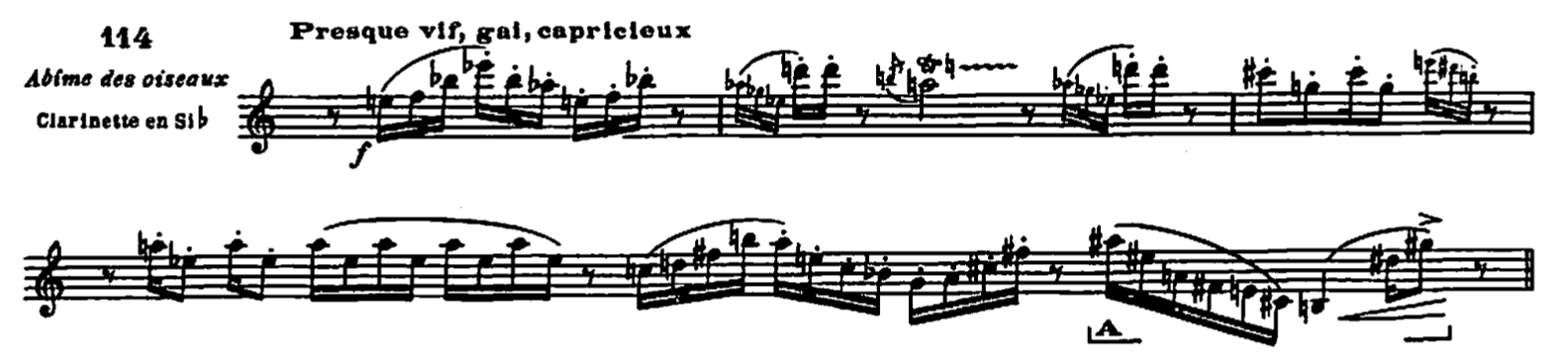
Example 114: Drawn from Quatuor pour la fin du Temps, demonstrating the first instance.
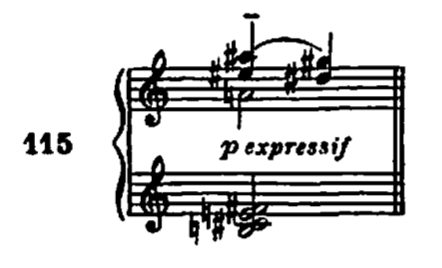
Example 115: "In A, an arpeggio on the dominant chord with appoggiaturas (Chapter XIV, article 1)"—showing harmonic context for bird-style melody.
Example 116: References Chapter VI, Article 7, Example 60 (Liturgie de cristal) from the Quatuor; describes "the so fanciful melody of the clarinet, particularly typical of the bird style." This represents the merle (blackbird) call.

Example 117: "Four ornamental variations of a theme and its 'commentary' (see Chapter XI, article 2) which were suggested to me by the improvisations of a merle"—demonstrating how bird songs inspire formal variation structures.

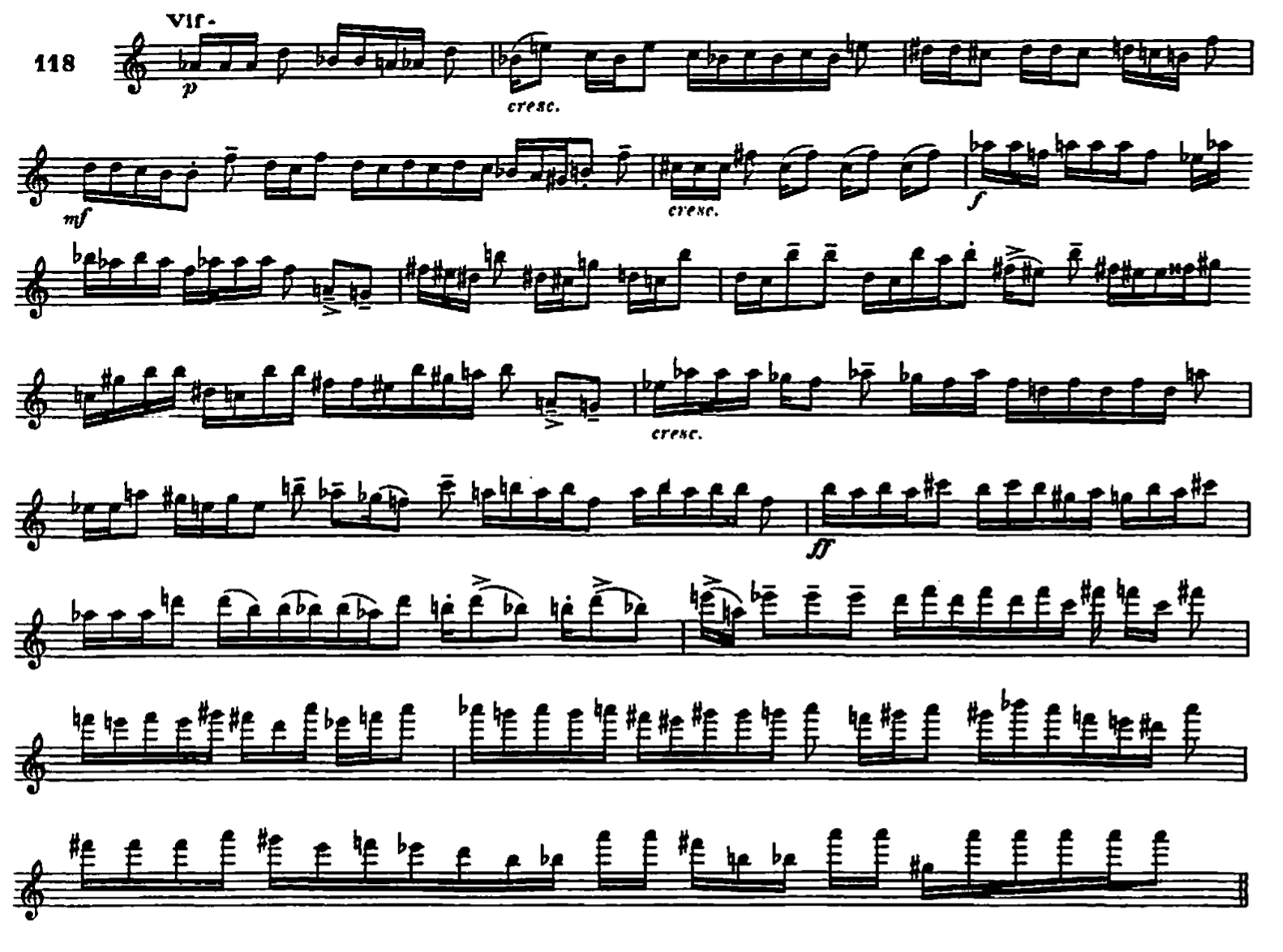
Example 118: "The vehement tirralirra, always higher, of the lark"—capturing the ascending, excited character of lark vocalizations.
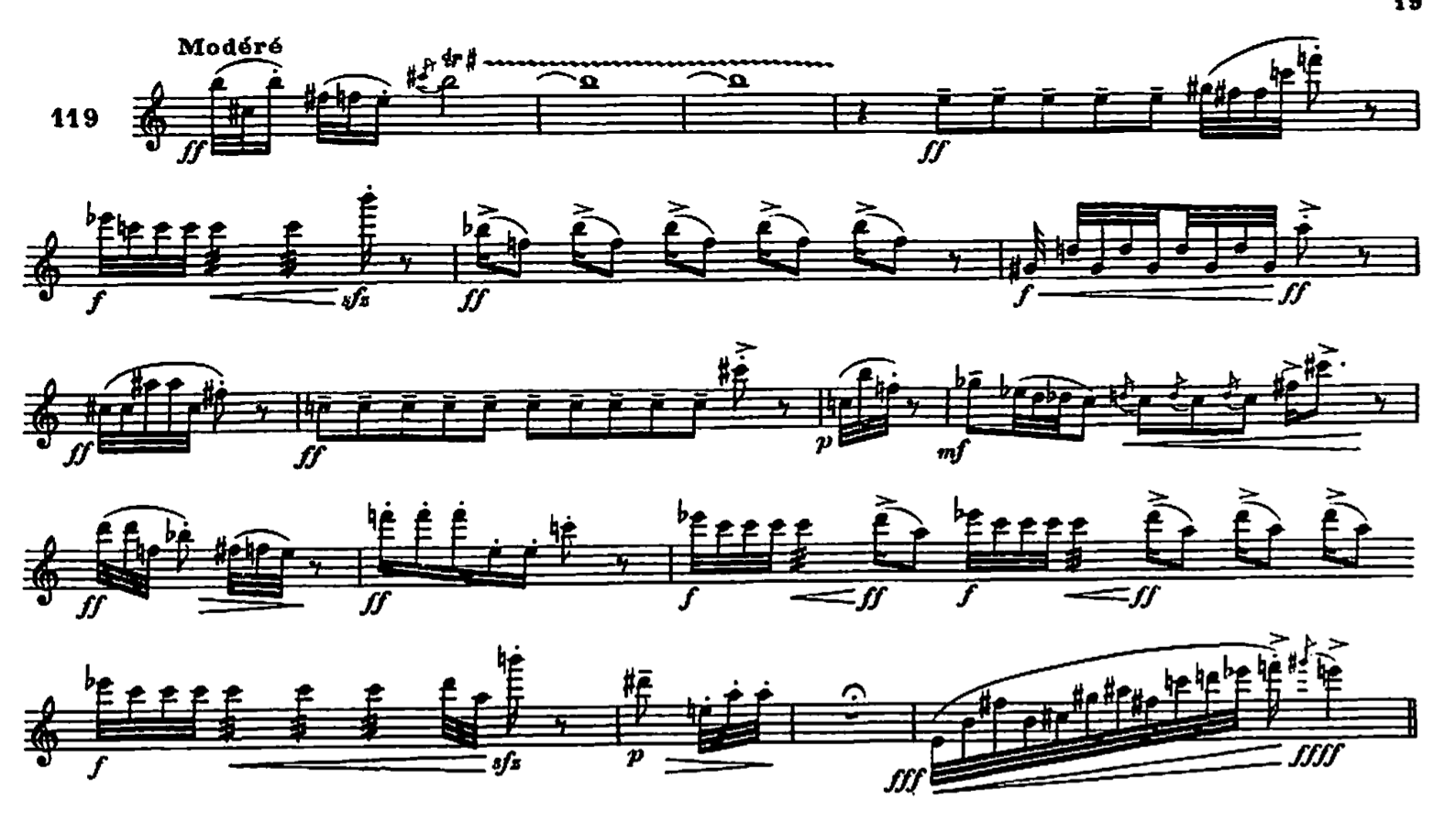
Example 119: "Hymn of the sparrows at daybreak"—depicting dawn chorus.
Modern Context: The concept of "bird style" represents Messiaen's distinctive contribution—a recognizable compositional genre with specific characteristics:
Stylistic features:
- Rhythmic freedom: Irregular, unpredictable rhythmic patterns avoiding metric regularity
- Melodic leaps: Wide intervallic jumps and rapid register changes
- Ornamental density: Trills, grace notes, rapid figurations suggesting avian vocal agility
- Registral extremes: High tessitura, particularly in wind instruments (clarinet, flute)
- Repetition and variation: Obsessive reiteration of motives with slight variations, mimicking territorial song
Instrumentation associations:
- Clarinet: Frequently used for blackbird (merle)
- Violin harmonics: Delicate, high-pitched bird calls
- Piano: Percussive attacks, rapid articulation
- Flute: Airy, high register bird songs
The reference to Liturgie de cristal from the Quatuor is significant—this movement features clarinet bird song over cello harmonic ostinato and piano rhythmic pedal, creating a dawn-chorus texture that became archetypal for Messiaen's bird-song compositions.
The merle (blackbird) appears twice (Examples 116, 117), indicating its importance as Messiaen's favorite bird. Later works feature extensive blackbird transcriptions, and Messiaen identified strongly with this species—the blackbird as the "musician-bird," most musical and improvisatory.
The connection to Chapter XI (melodic development, variation) shows that bird songs are not static transcriptions but materials for compositional development—themes to be varied, elaborated, and transformed through traditional formal procedures.
Examples: Examples 114–119 demonstrate various birds and contexts for bird-style writing.