Effects of Resonance
Definition: Compositional techniques employing chord clusters to simulate or evoke acoustic resonance phenomena, creating harmonic halos and coloristic washes.
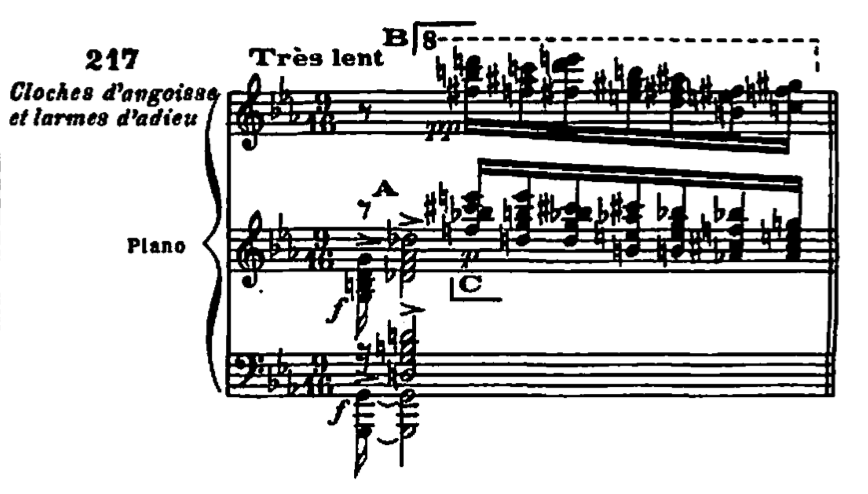
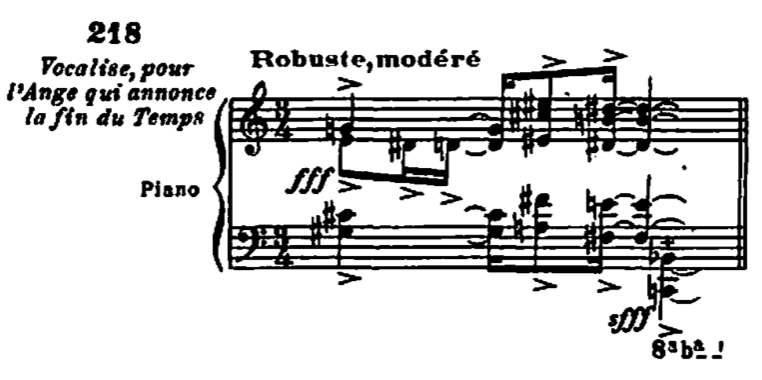
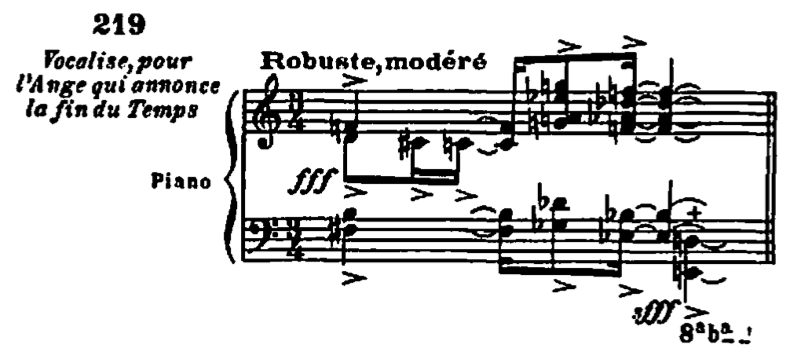
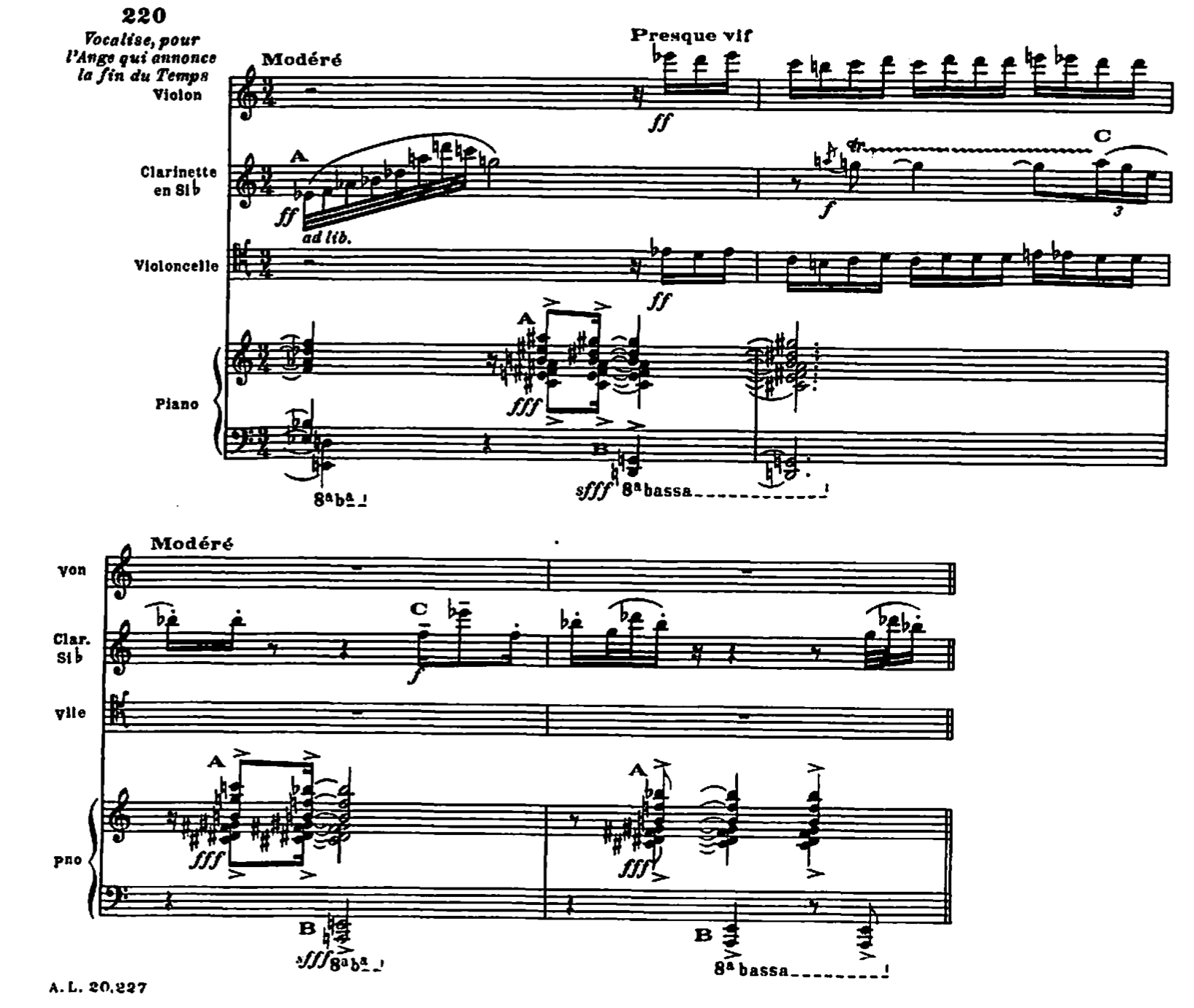
Messiaen's Treatment: Messiaen invokes Paul Dukas's discussion of "effects of resonance," describing them as pure fantasy similar to but distant from natural acoustic resonance. These effects involve learned rhythmic variations found in the Danses rituelles and especially in André Jolivet's Mana. Messiaen demonstrates both superior and inferior resonance: Example 217 shows superior resonance where cluster B (written in the sixth mode of limited transpositions) and cluster C (in the second mode) form resonance above chord A. Example 218 presents inferior resonance (marked with a cross), followed by analogous effects (Example 219) and a third example of inferior resonance (Example 220). Example 221 integrates multiple techniques: at point A, an arpeggio combining clarinet and piano chords creates the chord on the dominant; at point B, inferior resonance appears; at point C, bird-style melodic contours emerge (referencing Chapter IX).
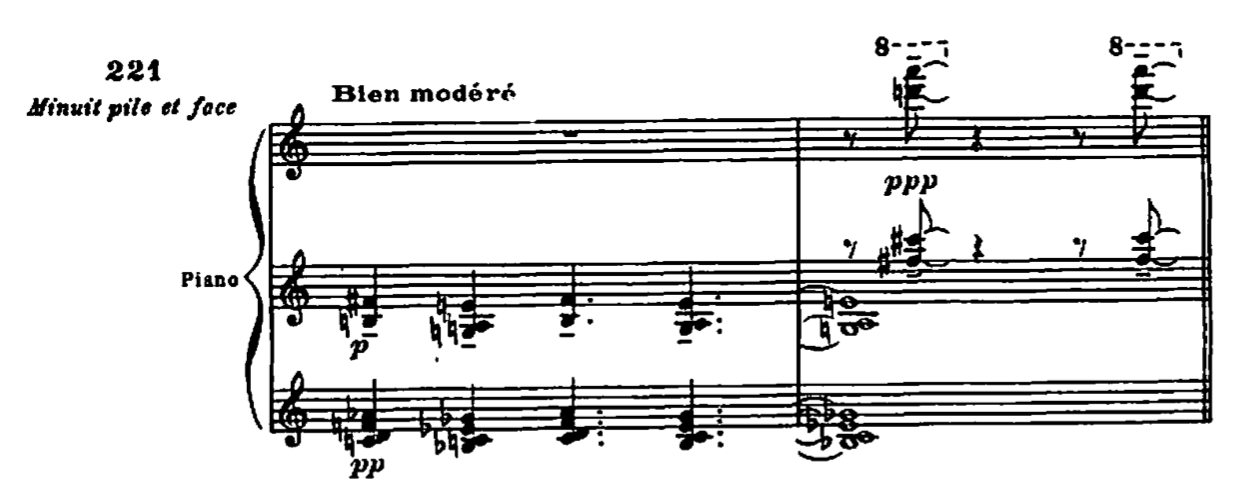
Modern Context: The concept of resonance effects anticipates techniques later codified in spectral music, where composers systematically derive harmonic structures from acoustic spectra. Messiaen's approach differs from later spectral practice in remaining more intuitive and coloristic rather than mathematically rigorous. The use of modal clusters (from the second and sixth modes) to create resonance reveals the systematic integration of symmetrical pitch collections with coloristic goals. Contemporary orchestration treatises might describe similar effects as "harmonic pedals" or "sustained resonances," but Messiaen's emphasis on the acoustic metaphor—treating added clusters as if they were naturally occurring overtones—distinguishes his conception. The technique relates to what Varèse would call "sound masses" and what Ligeti would later develop in his micropolyphonic textures, though Messiaen maintains clearer distinctions between resonating and resonated structures.
Examples: Examples 217–221