A Look at Other Styles
Definition: Analytical examination of how other composers' harmonic languages can be understood through Messiaen's theoretical framework.
Messiaen's Treatment: Messiaen analyzes passages from his own earlier work Pelleas (Example 223) as engendering Ravel's Danse générale from Daphnis and the polytonality particularly associated with Milhaud. He traces harmonic evolution from composer to composer, acknowledging the curious progression from Orfeo and Monteverdi's madrigals through contemporary practice. Messiaen then provides analytical transformations of passages by Debussy and Ravel: a measure from Debussy (Example 224) and its progression (Example 225), followed by another transformation (Example 226); a measure from Ravel (Example 227) and its reversal (Example 228), followed by another transformation (Example 229). These analyses demonstrate how passages by other composers can be reinterpreted through Messiaen's vocabulary of added notes, modal structures, and resonance effects.
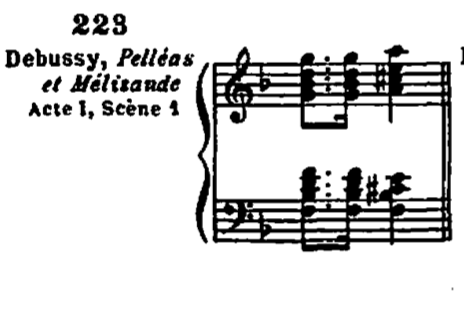
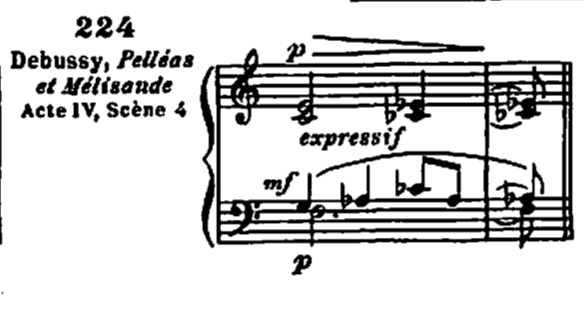
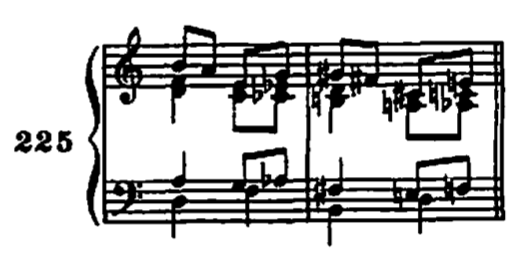
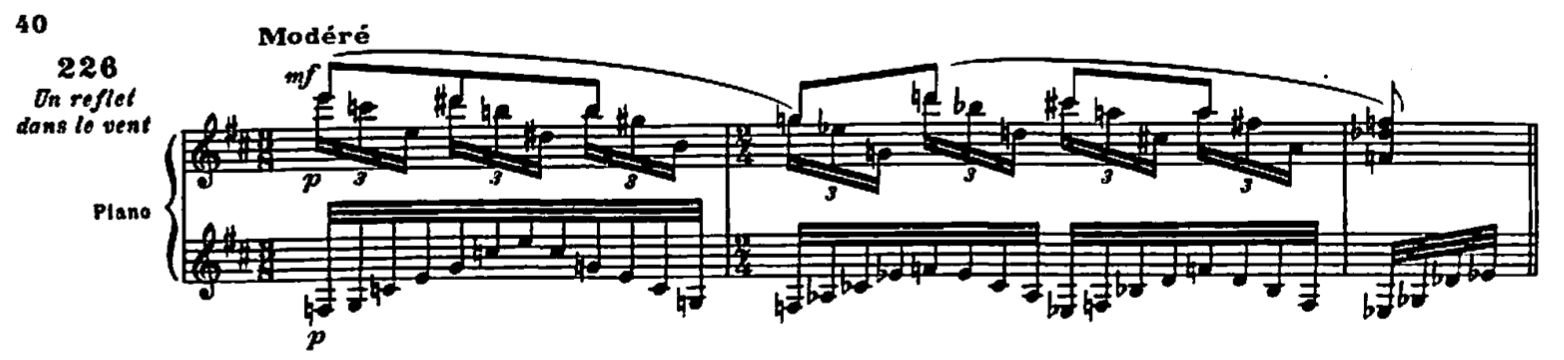
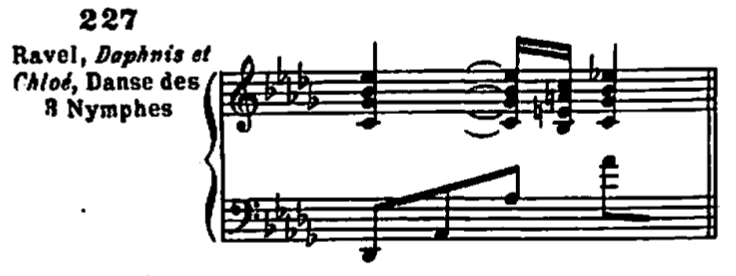
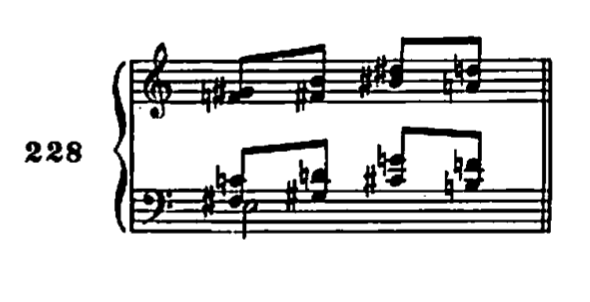
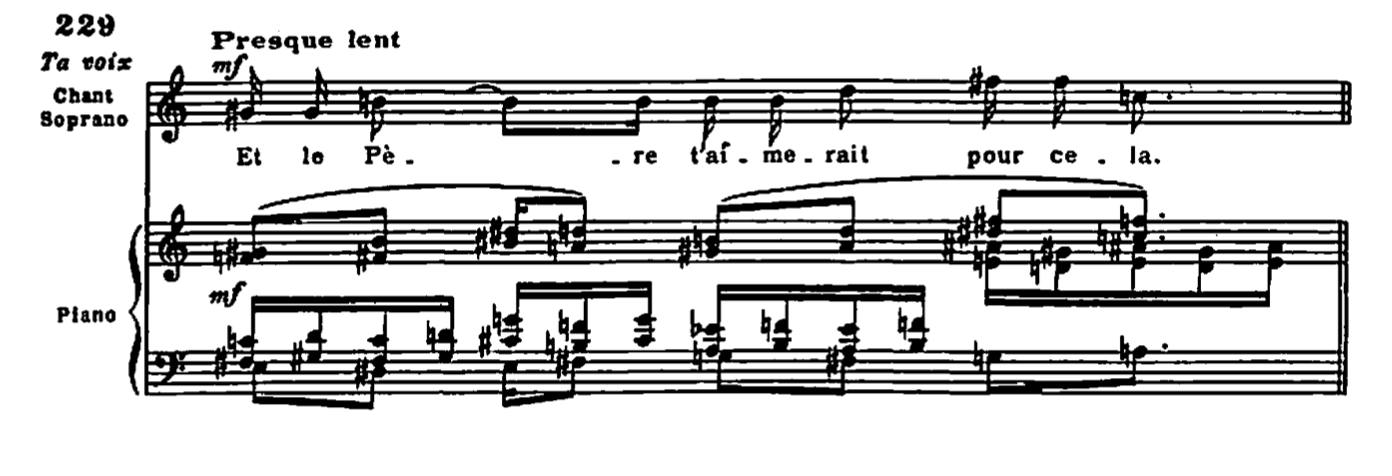
Modern Context: This analytical approach reveals Messiaen's pedagogical method—showing how his techniques connect to and derive from the harmonic practices of his immediate predecessors. The transformations demonstrate that Messiaen views Debussy and Ravel not merely as historical influences but as composers whose harmonic innovations can be systematically understood through the theoretical apparatus he is constructing. Contemporary analysts might describe this as "transformational analysis," showing how specific harmonic configurations can generate related structures through systematic operations. The acknowledgment of evolution from Monteverdi through the madrigalists to modern practice situates Messiaen within historical continuity rather than revolutionary rupture—his harmonic innovations emerge organically from earlier developments. The polytonality reference to Milhaud signals Messiaen's awareness of alternative contemporary approaches, even as he pursues his own modal-resonance-based path.
Examples: Examples 223–229