Chapter XI: Song-Sentence, Binary and Ternary Sentences
Original: Pages 37–39 in Satterfield translation
Musical Examples:

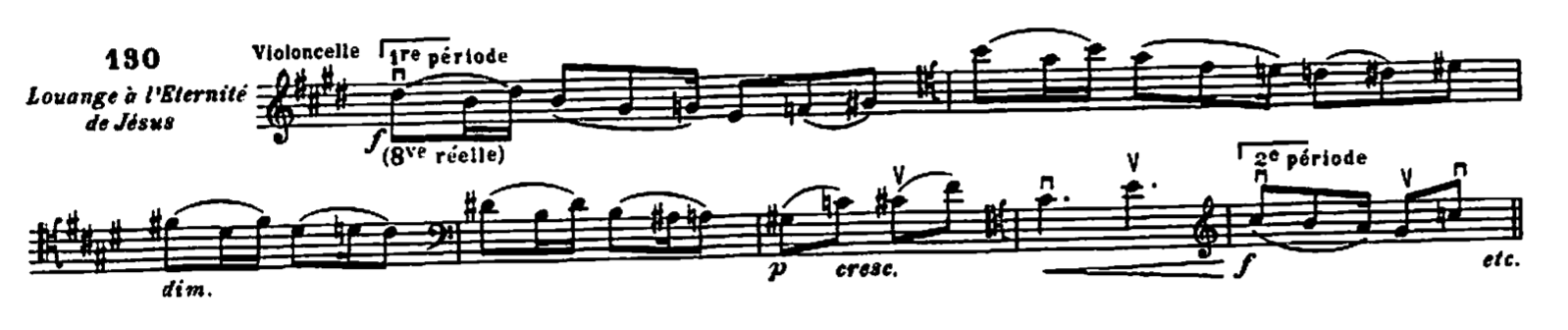

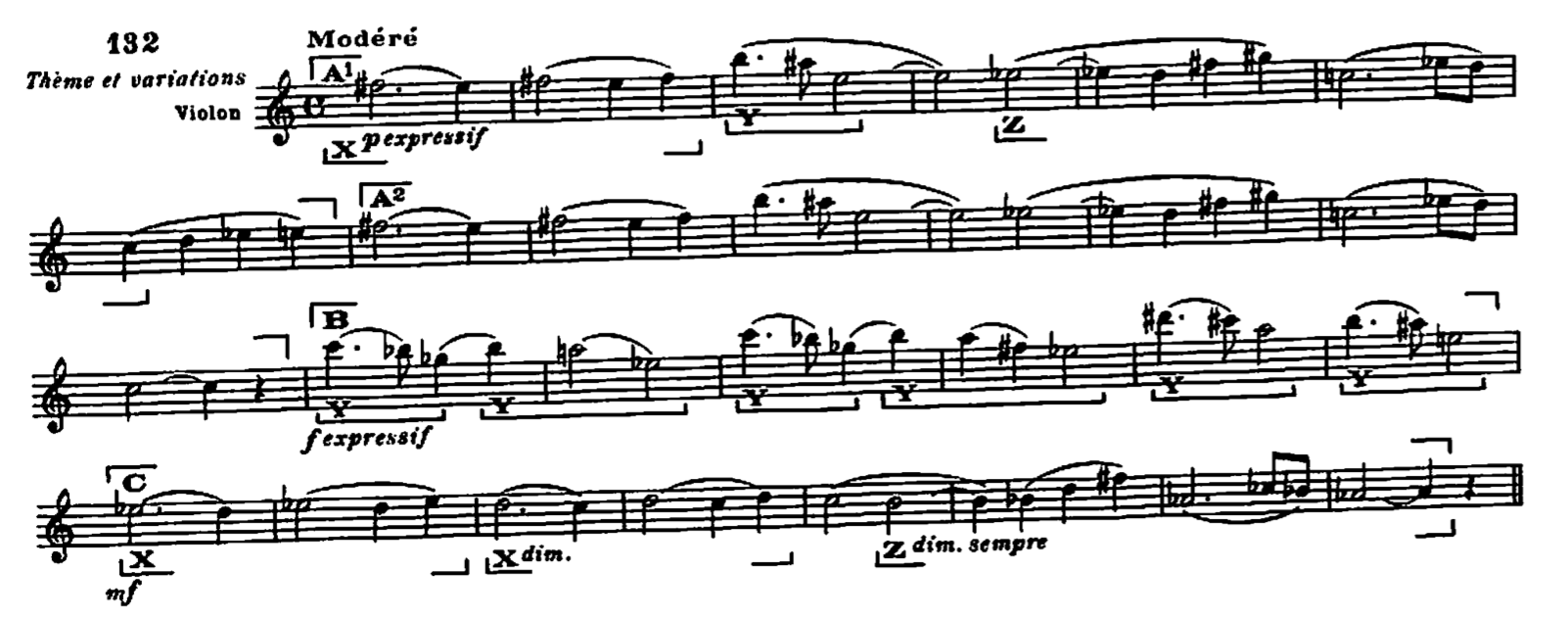
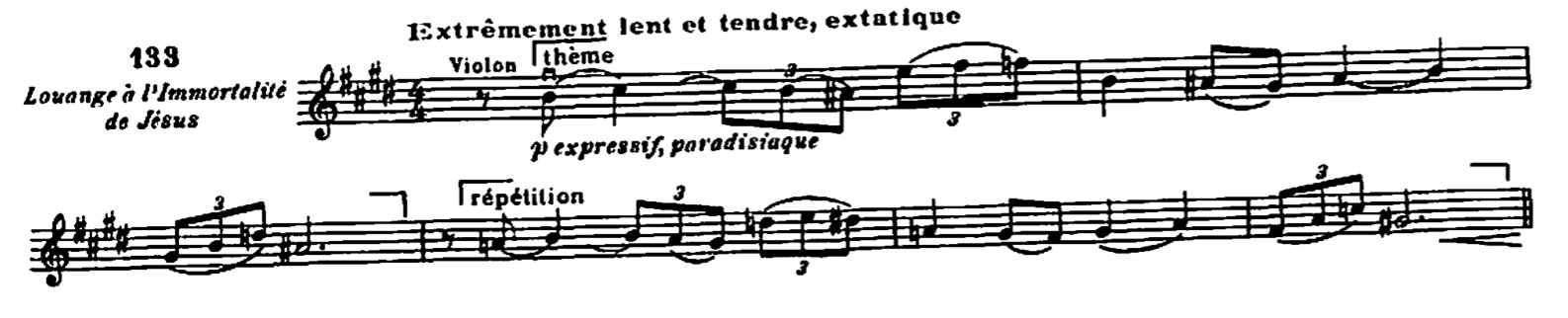

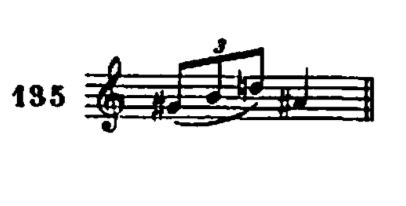
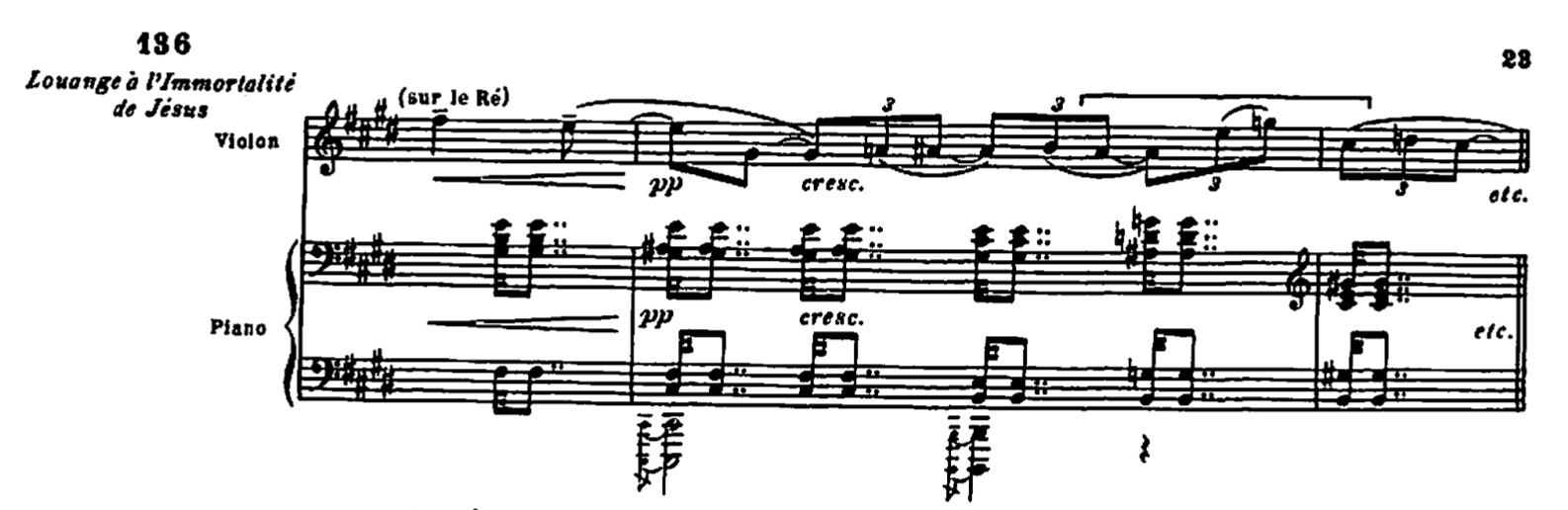
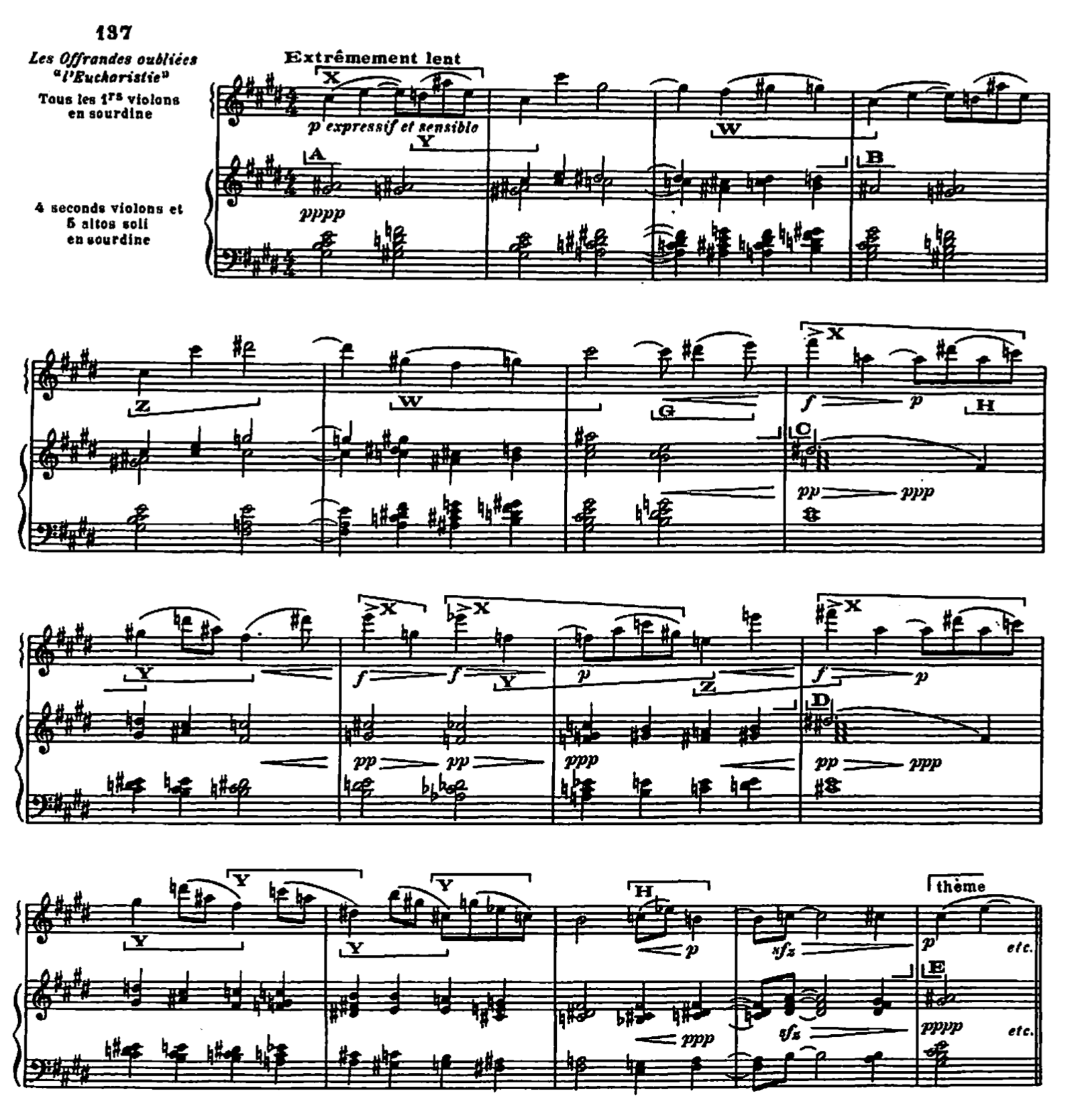




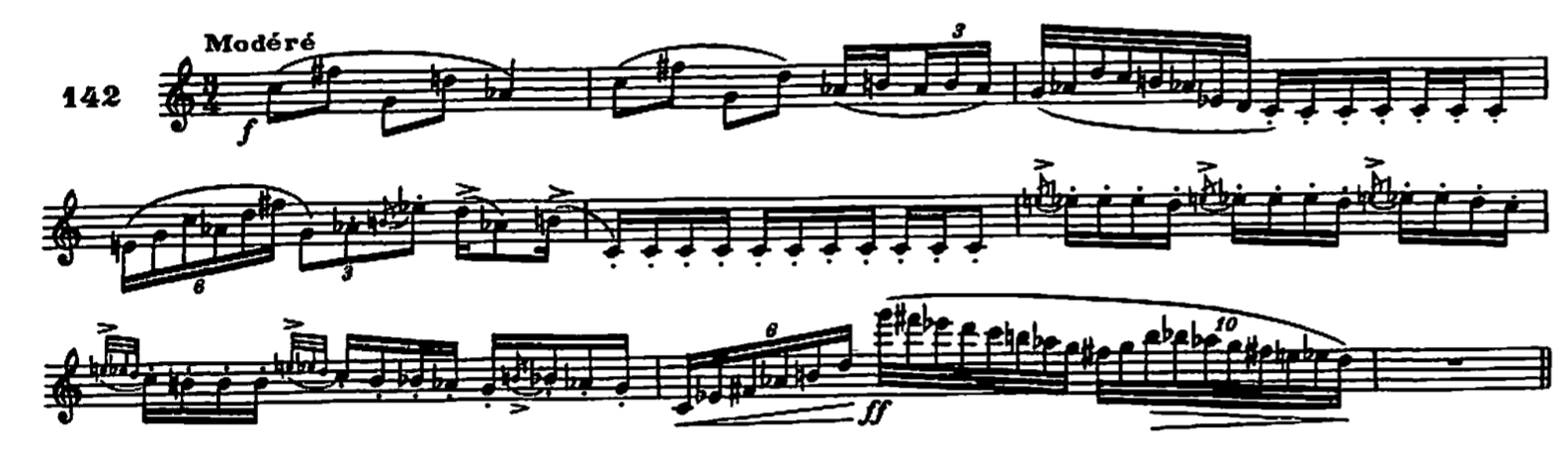
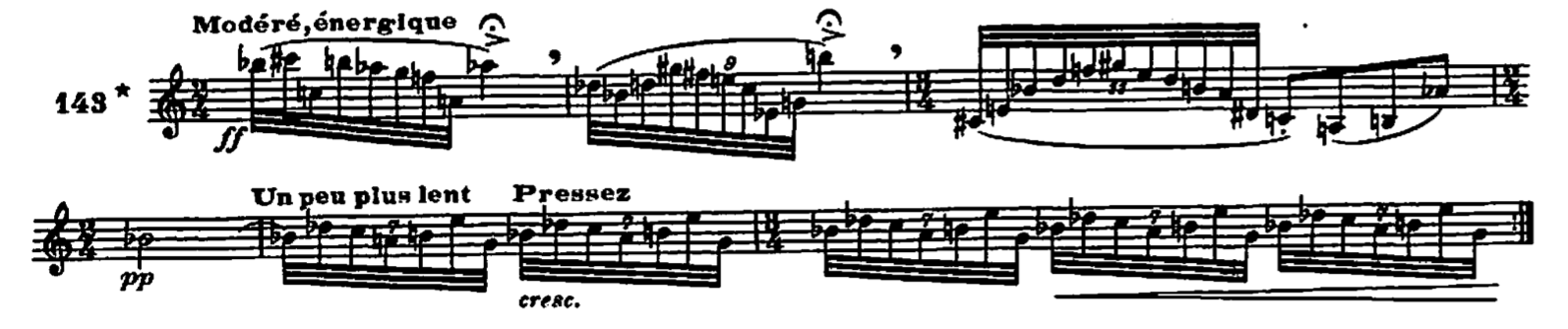



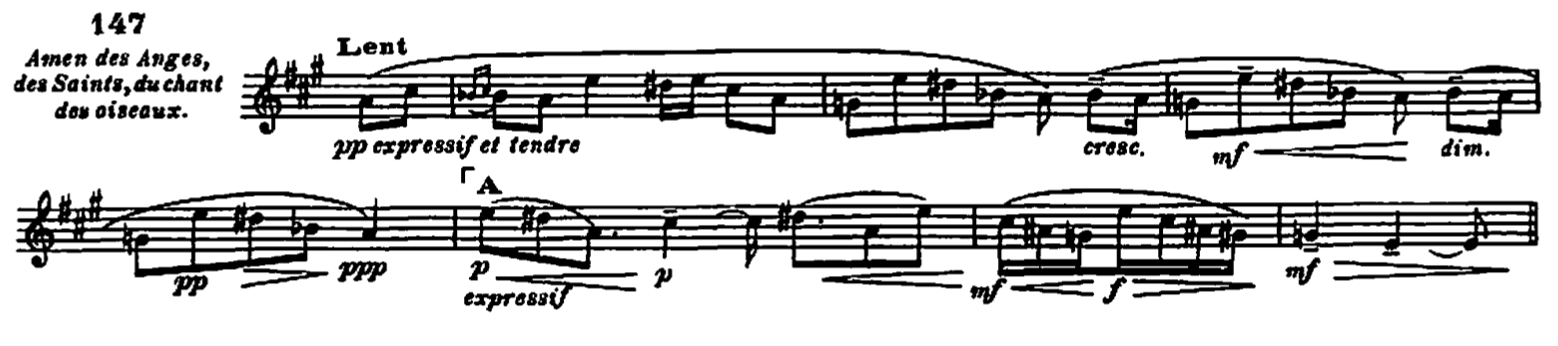


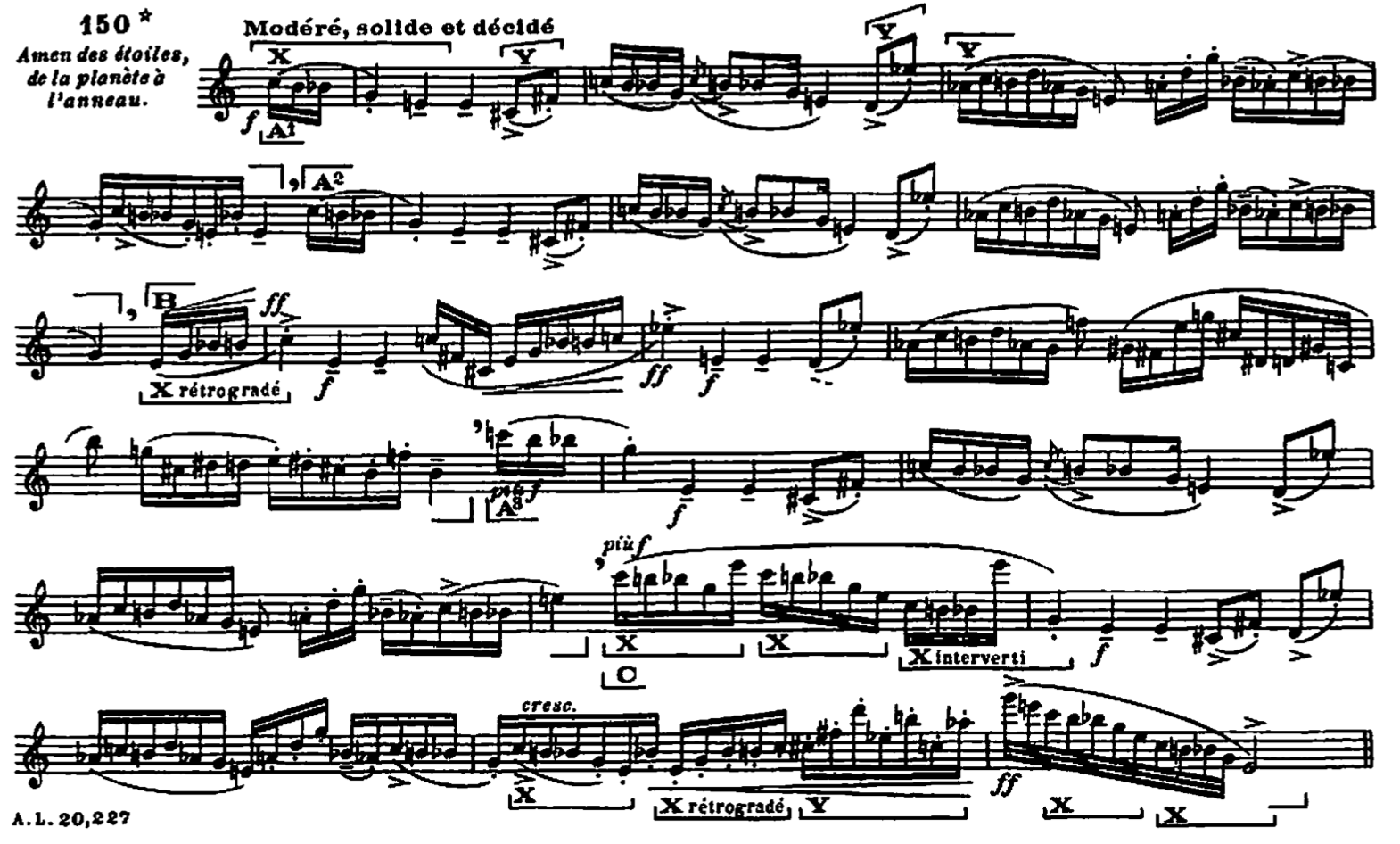
Overview
This chapter systematizes phrase structure and small-scale formal organization, establishing how melodic periods combine into complete musical sentences. Drawing on Vincent d'Indy's Cours de composition musicale and Marcel Dupré's Traité d'improvisation, Messiaen identifies three fundamental sentence types: song-sentence (antecedent-consequent structure with middle period), binary sentence (two commentaries framing theme statements), and ternary sentence (theme-consequent-commentary-consequent-theme creating five-part arch). The chapter then provides an extensive catalog of melodic periods (Examples 138–150), demonstrating how diverse historical models—Ravel, Adam de la Halle, Mozart, Manuel de Falla, Bartók, Jolivet, Hindu music, Russian songs, Rameau—can be transformed through the "deforming prism" of Messiaen's language. This represents the application of traditional formal thinking (period structure, antecedent-consequent relationships) to melodic material derived from eclectic sources and organized within Messiaen's modal-rhythmic systems. The chapter bridges between local melodic construction (Chapters VIII–X) and large-scale forms (Chapter XII), showing how phrases organize into sentences that can then organize into complete movements or works.