Chapter VIII: Melody and Melodic Contours
Original: Pages 31–33 in Satterfield translation
Musical Examples:
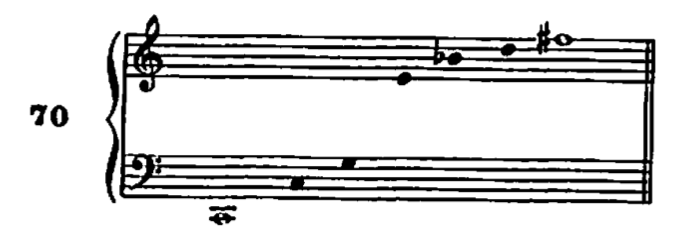
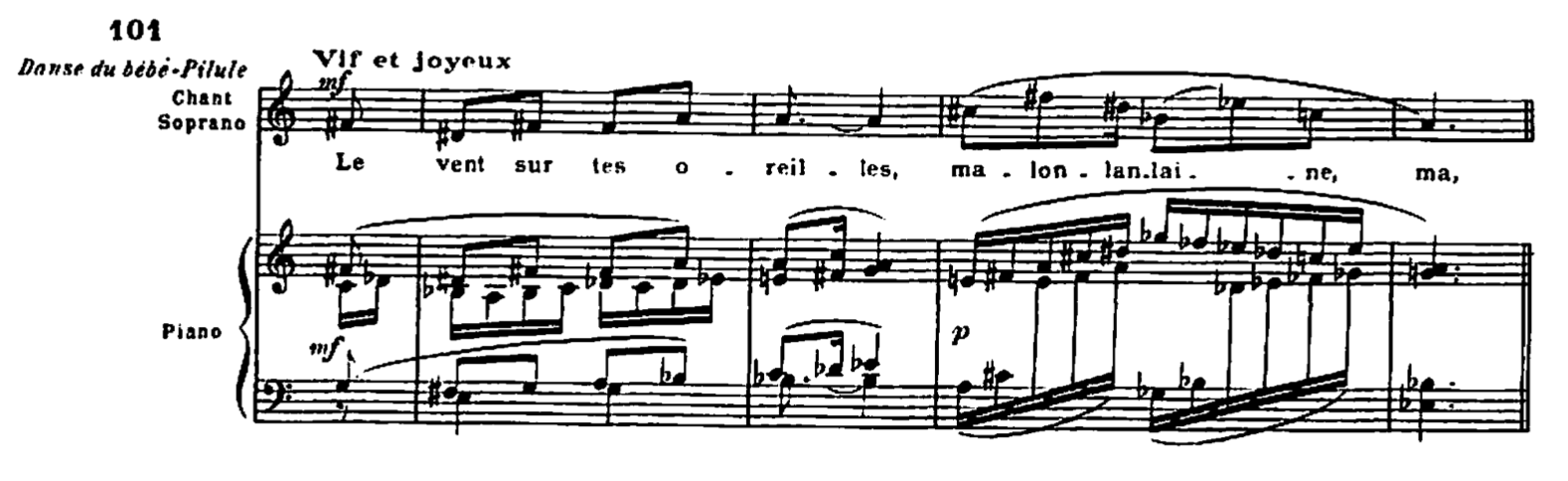
- Example 70
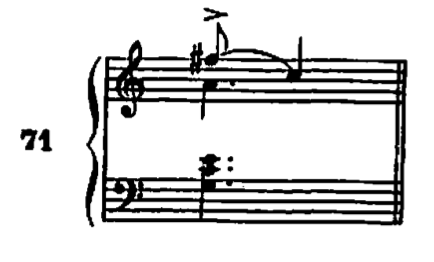
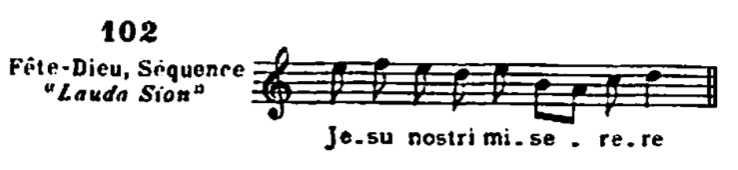
- Example 71
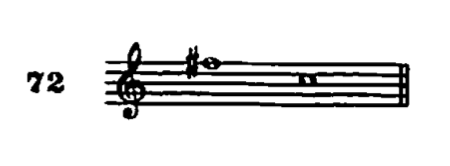
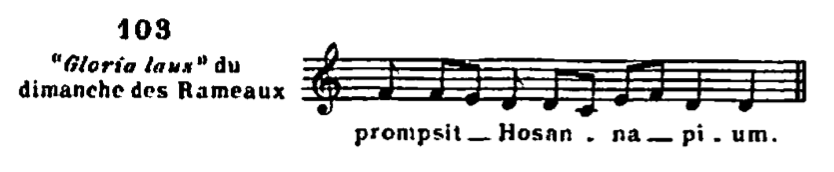
- Example 72
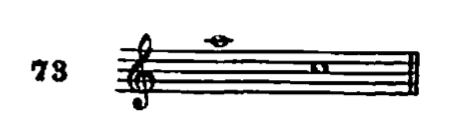
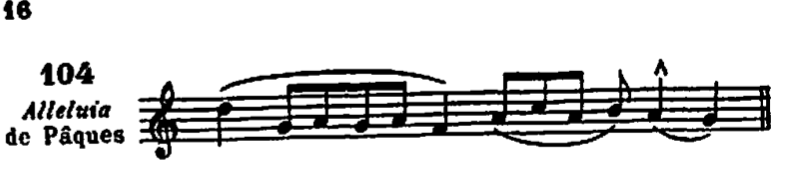
- Example 73
- Example 74
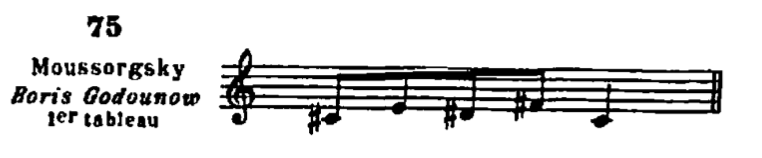
- Example 75
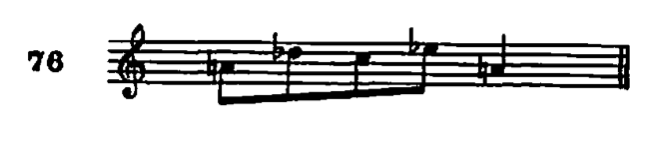
- Example 76
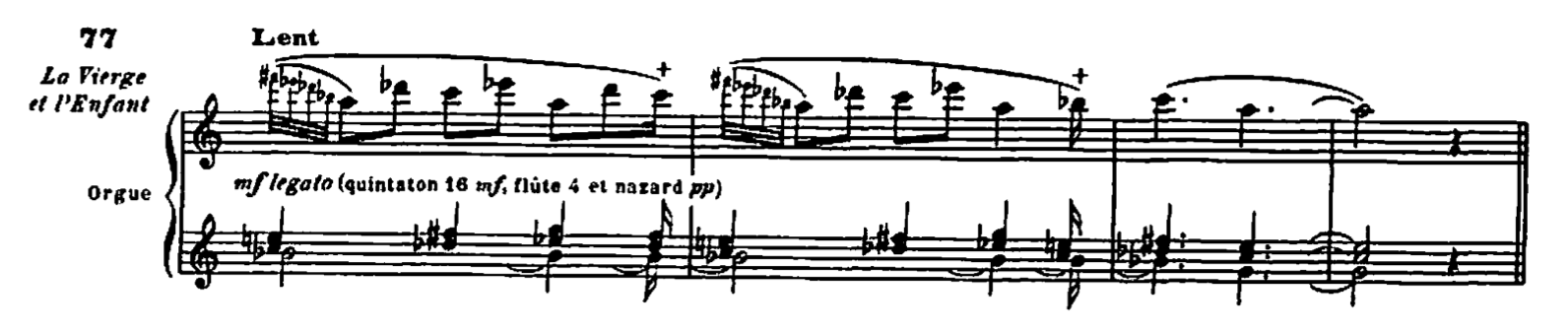
- Example 77
- Example 78
- Example 79
- Example 80
- Example 81
- Example 82
- Example 83
- Example 84
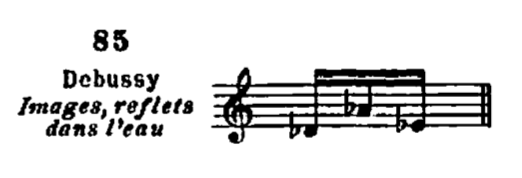
- Example 85
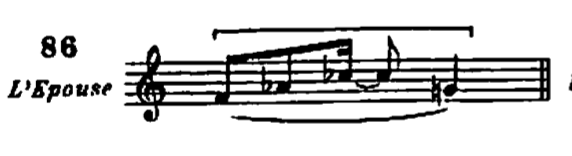
- Example 86
- Example 87
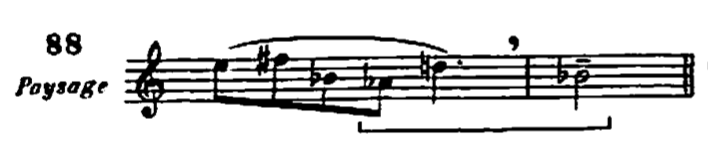
- Example 88
- Example 89
- Example 90
- Example 91
- Example 92
- Example 93
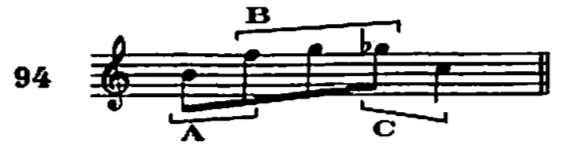
- Example 94
- Example 95
- Example 96
- Example 97
- Example 98
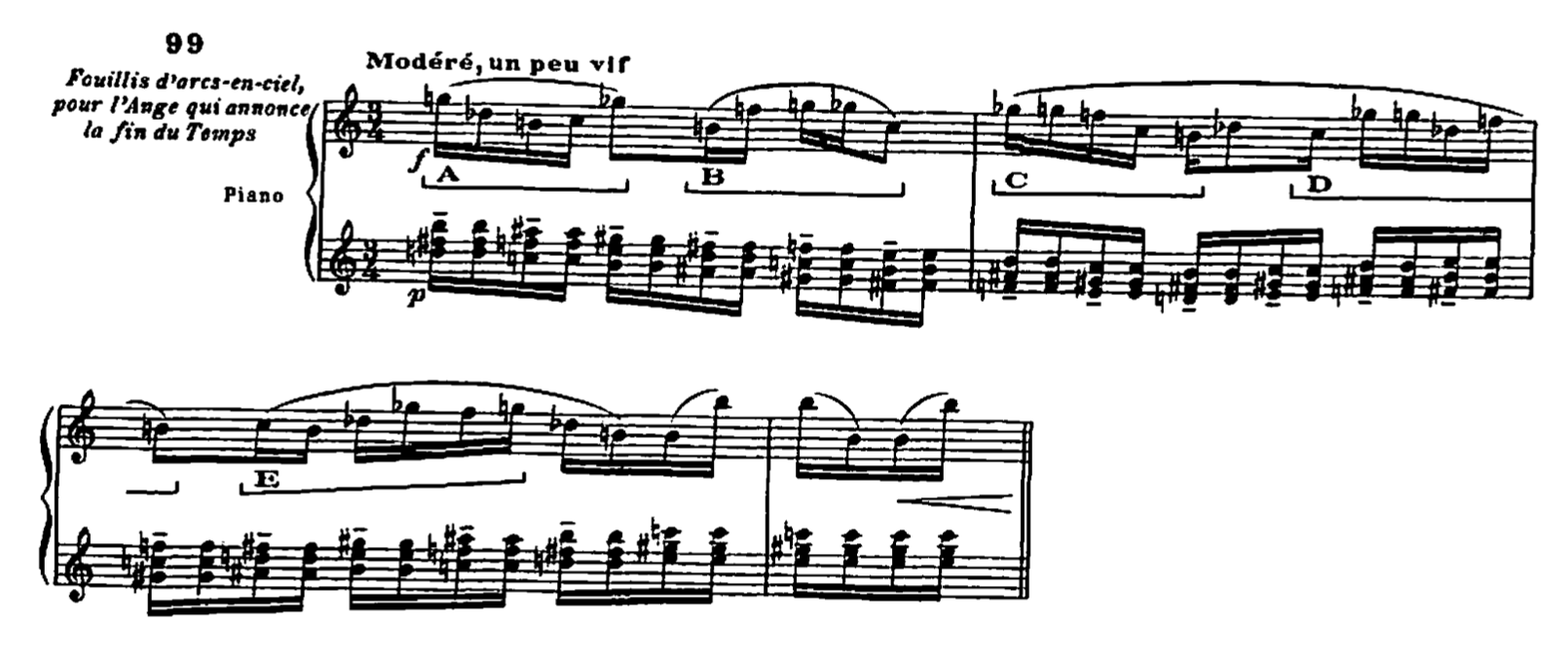
- Example 99
- Example 100
- Example 101
- Example 102
- Example 103
- Example 104
- Example 105
- Example 106
- Example 107
- Example 108
- Example 109
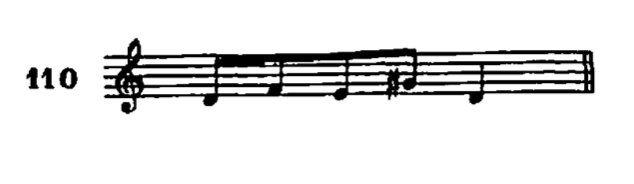
- Example 110
- Example 111
- Example 112
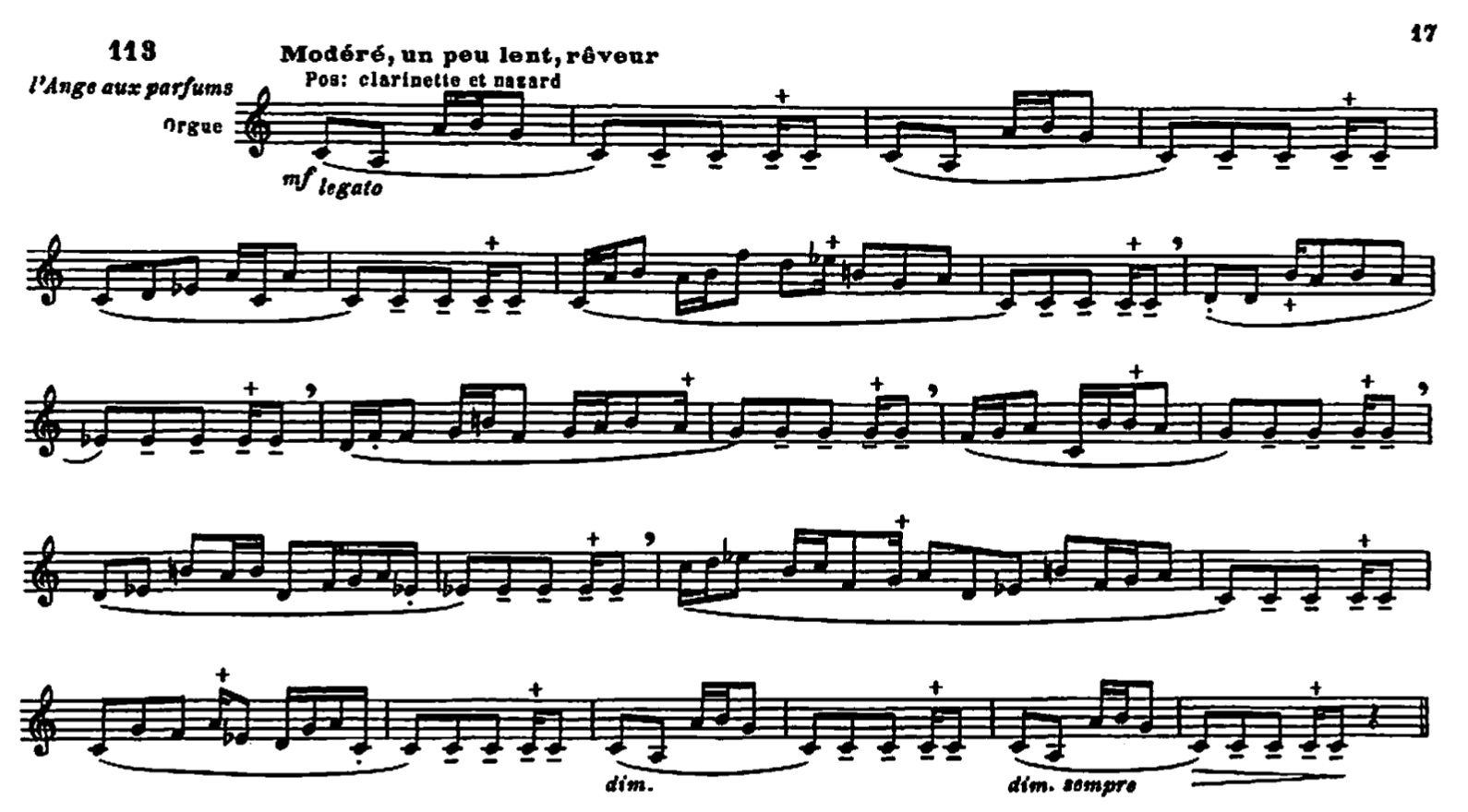
- Example 113



















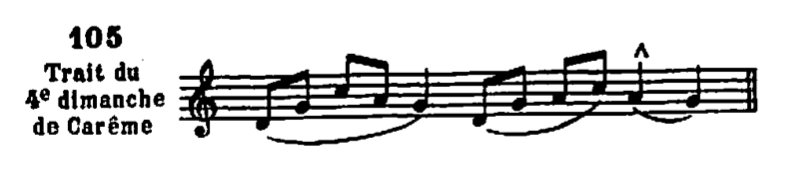
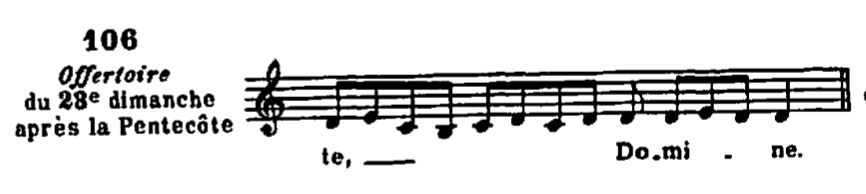
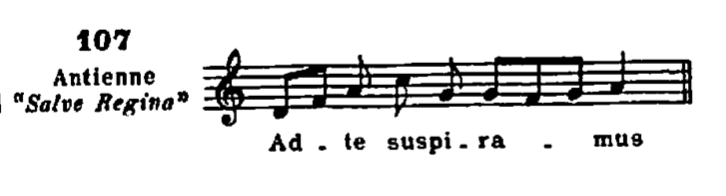

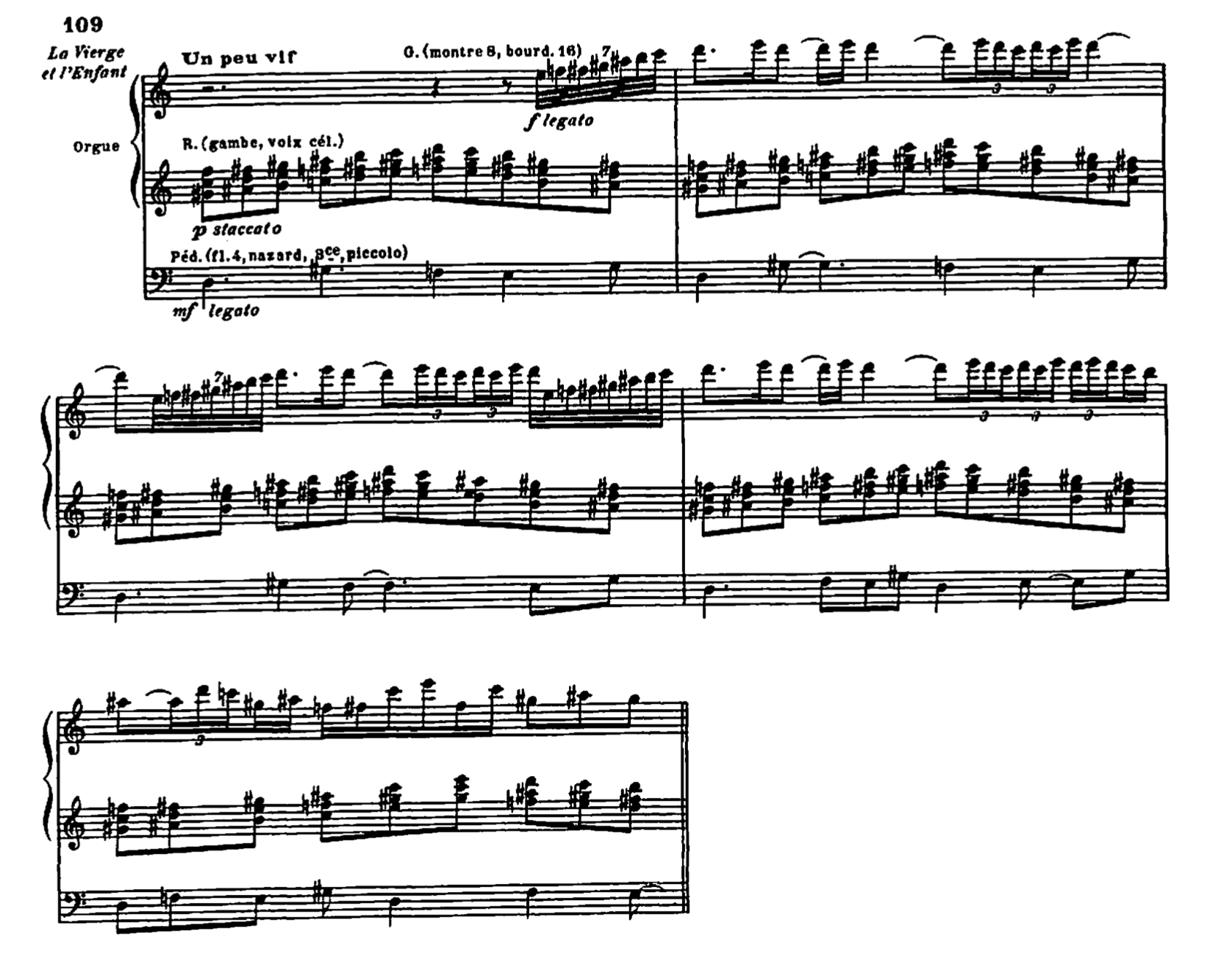


Overview
This chapter initiates the treatise's melodic section by establishing fundamental principles of interval choice and melodic contour construction. Messiaen begins by reaffirming melody's supremacy—it is the noblest element of music and the principal aim of investigation, with rhythm remaining pliant and giving precedence to melodic development. He invokes Paul Dukas's pedagogical principle that harmony must be chosen to be "true"—wanted by the melody and its outcome. The chapter then systematically explores intervallic preferences (descending augmented fourths and major sixths), melodic cadential formulas derived from historical models (Moussorgsky, Grieg, Debussy), folk song influences (Russian and French), plainchant contours, and Hindu ragas. This synthetic approach—drawing from Western art music, folk traditions, liturgical repertoire, and non-Western sources—demonstrates Messiaen's method of historical synthesis applied to melody, paralleling his approach to rhythm in Chapter II. The chapter functions as a catalog of melodic resources rather than a systematic theory, identifying preferred intervals, characteristic contours, and source materials that inform Messiaen's melodic practice.